
Every so often, usually towards the end of the year, a YouTuber will post a video of their collection. This instinct to provide “state of the collection” posts is almost universal on forums. “Look at what I have done and validate me,” these collectors seem to shout into the void. It is only when you see a collection as a whole, rather than just parts, that you begin to see the forces shaping the collection. Sometimes we move from watch to watch without looking at what we are doing as a collector. We look back and realize that we have enough dive watches to outfit Seal Team 6, or all chronographs for events that we never time.
There are occasions when we see a collection and we see a through line straight to the collector. As Chris would say, “we all have a type.” But this is slightly more than preferring the willowy to the zaftig. This is ordering the “good” and “bad” according to fundamental principles that you hold. It is valuing the form and function and balancing them similarly through many purchases. I have begun to dislike collections that are merely the newest releases, or Rolex’ greatest hits, or all Seiko all the time. These seem to me to be unthinking choices, perhaps driven by a desire to fit in rather than following one’s own light.
I may have one such “bad” collection. When I see collections posted I am reminded that my taste is not universal. I will not call out a bad collection because I have reflexive manners that prevent this. But what lurks beyond mere instinct to like or dislike a collection?
Well, a theme of course. When I teach trial tactics (as I do from time to time) I try to instill in new trial attorneys the importance of thinking of their cases not merely as a collection of facts. These facts, and inferences from facts or lack of facts, must be organized into a theme. Juries will latch on to a theme and carry the weight for you. Some themes are of the off the shelf variety (“shoddy police investigation”) others have to be crafted from the facts at hand.
All of us have collections of watches or dreams of collections of watches. What is the guiding principle behind your acquisitions? Have you given it any thought? (See watch, buy watch.) Some people want to impress with wealth or status. Some want to collect things that have family connections or meaning. Some genuinely dive or have other active pursuits that shape their collection. I wouldn’t take a seventy-year-old dress watch mountain biking. There are watches for every activity.
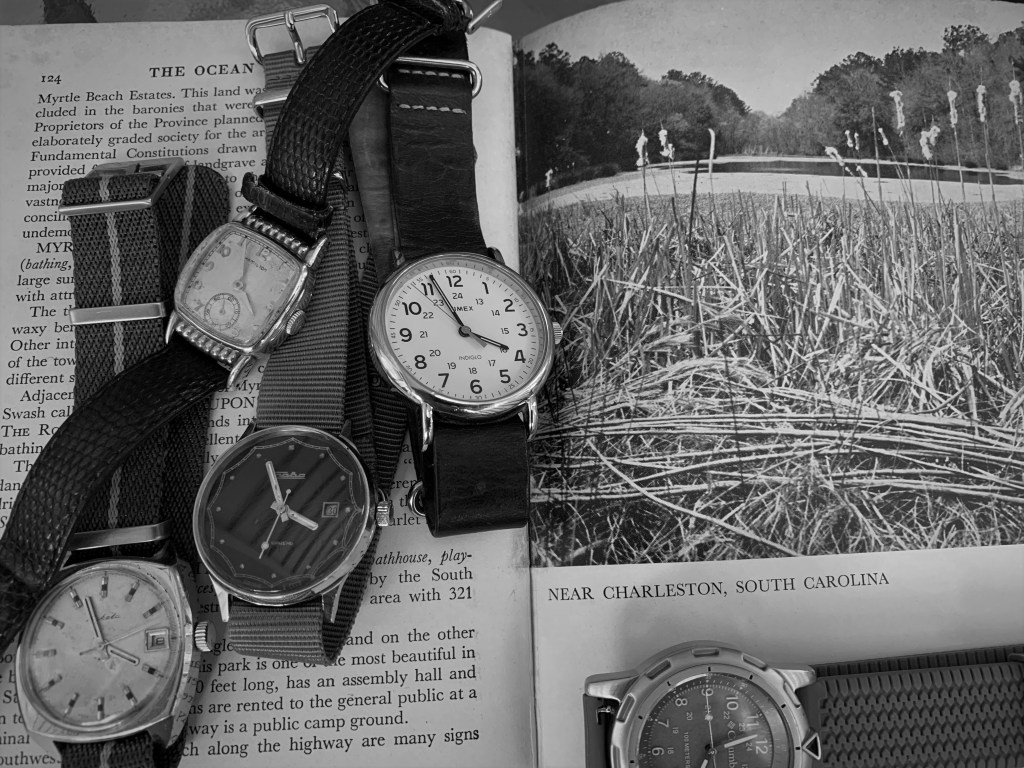
I spent many years in New Orleans and the New Orleans Botanical Garden is one of my favorite places on earth. Throughout the garden are the works of sculptor Enrique Alferez:

His works were made possible by the WPA, the Work Progress Administration, a Depression era jobs program. Many American cities were transformed by the WPA. This program built courthouses and public buildings, but also preserved oral histories and cultural traditions that were disappearing in the 1930’s. The book in the picture above details the coastal communities that were losing their traditions and modernizing. It was published by the WPA.
Collecting vintage is about preserving what is being lost. I studied ancient history in college and so a backward facing collection is not any sort of revelation. I have many watches that are referred to as “generic Swiss”. These were small inexpensive brands, usually family businesses. What does it say that I have, or have had, at least one vintage Raketa, Slava, Chaika, Start, Neva, Zim, Podeba, Ruhla, HMT, Dongfeng, Zvezda and Prim. All of these watches were produced in countries that were unfree, socially and economically, and could not produce luxury watches. My Seikos were not top of the line. My oldest Hamilton was meant to be a post-war high school graduation gift. Every one of my Elgin is an everyman watch. I have a working man’s collection. I am a proletariat watch collector. I have always had a soft spot for America’s quasi-socialist experiment, the WPA, and it is reflected in my watches.
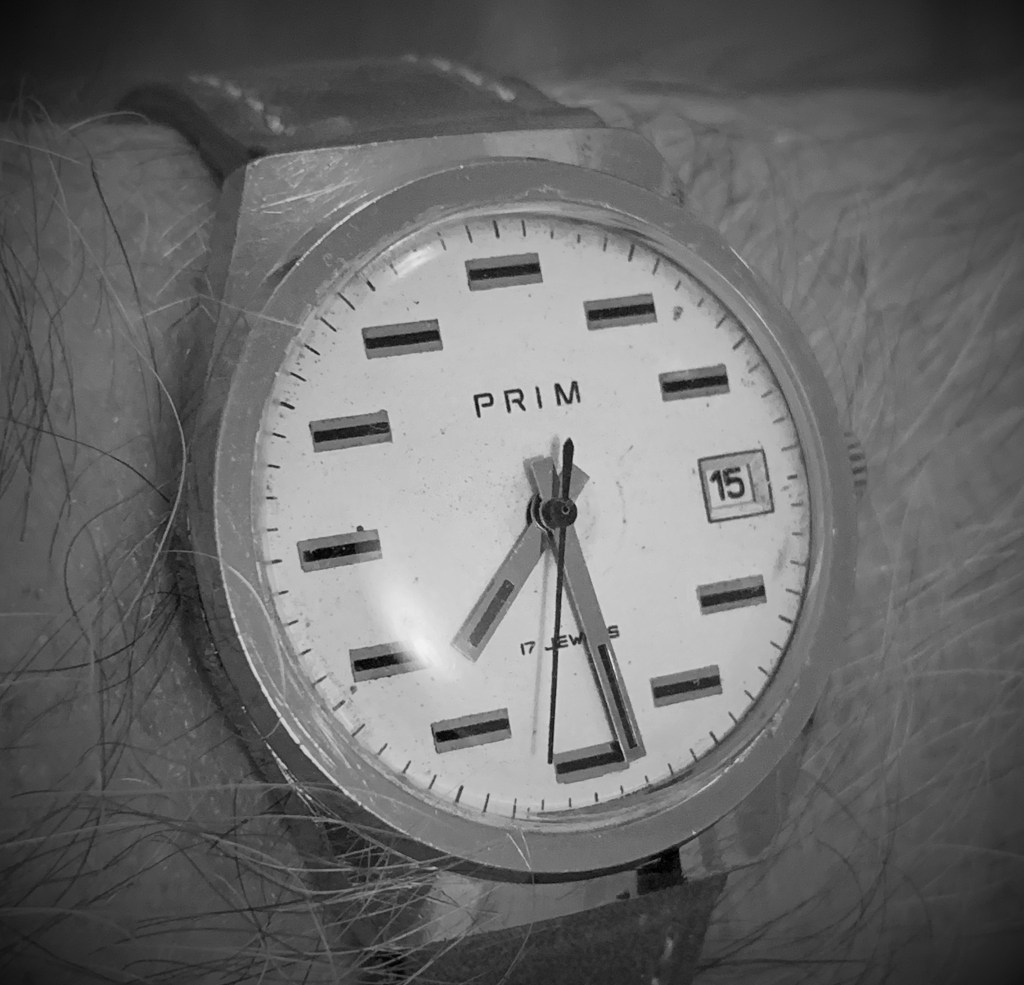
Take a long look: does your collection have a theme?

 The Escapement Room