
Kaysia has written convincingly about what burlesque performers, drug addicts, and fictional vampire hunters and serial killers can teach us about watch collecting. (I learned once not to take a cigarette from a woman who was performing on stage and that I can, or could, inhale an entire Virginia Slims Menthol in one breath. But I digress.) I want to open another category of person from whom we can learn about watches and watch collecting, ancient Greek philosophers.

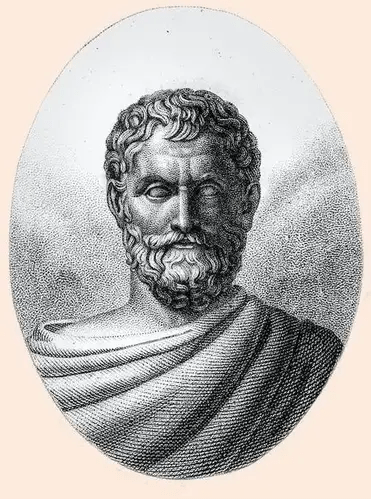
Like many historical persons who lived approximately twenty-seven centuries ago, we don’t know all of the biographical information that we would like to about Thales of Miletus. He is mentioned in Herodotus and most of what we do know was compiled by Diogenes Laërtius some eight centuries after his death. Thales was either Greek or Phoenician by birth (the distinction is more linguistic than genetic). He either married and had a son, or didn’t, and adopted his nephew. It is claimed that he traveled to Egypt or Babylon, or both, and brought the gnomon back to Greece. (The gnomon is the triangular fixed point on a sundial that can divide a dial into twelve parts. Both the Egyptians and Babylonians knew of this, as did the Chinese. Another digression: it appears the Chinese had sundials by 2300 B.C., making them the first. Take that Switzerland.) But, it is likely that he did not travel at all.

Thales predicted eclipses, the ancient world’s number one party trick. It is claimed that he could predict the weather. He is credited with two geometric theorems, Thales’ theorem (imagine that) and the intercept theorem. Both involve triangles. But, that is math and I don’t do math more complicated than leaving a tip for a server. One interesting story is that based on his prediction of a good weather season for Miletus’ olive crop that Thales bought or rented (at a discount) all of the olive presses before the harvest. This way, depending on which version of the story you believe, it is the first instance of the use of futures or options. Aristotle says that Miletus did not do this to get rich (which he did) but to prove the usefulness of philosophy.
But, that’s all great you say, what about watches?
Roman and Greek writers claim that there were three maxims inscribed at the Temple of Delphi. Prominent among them was Γνῶθι σαυτόν, gnōthi sauton or “know thyself”. Yep, that’s from our boy Thales.
It is easy to see how that can be applied to watch collecting. How many watches have you moved on from or sit unworn in a box or drawer? These watches seemed like sure winners once but have since lost their luster. The problem lies not within the watch. Its specs and quality may be fine. The problem is us. We didn’t need a seventh pilot’s watch. We don’t wear suits to work anymore. We didn’t realize how large or small the watch would wear. We can’t replace the uncomfortable bracelet. There are myriads of reasons, but they all start with the wearer, not the watch. We did not know what we needed in a watch. It was bought to serve some other need, perhaps buying for status, FOMO, or just to buy. If we take Thales’ message to heart, we will avoid these mistakes. Our collections will project what we need and want in a watch.
I once thought that I wanted a solar quartz watch. It was going to be worn on workdays, not necessarily to be a weekend warrior. It needed a to be a certain size with a certain formality. It would be there, accurate to within seconds a month, day in, day out. Luckily for me that watch does not exist. Citizen insists on making watches for people who do not share my tastes. They are too large and too informal. The point of solar quartz was that it is always ready. Putting it into a box on a long rotation would not play to its strengths. I like a new watch everyday. I like a long break between wears. I want to miss wearing it. I am not a “one and done” type of watch person.
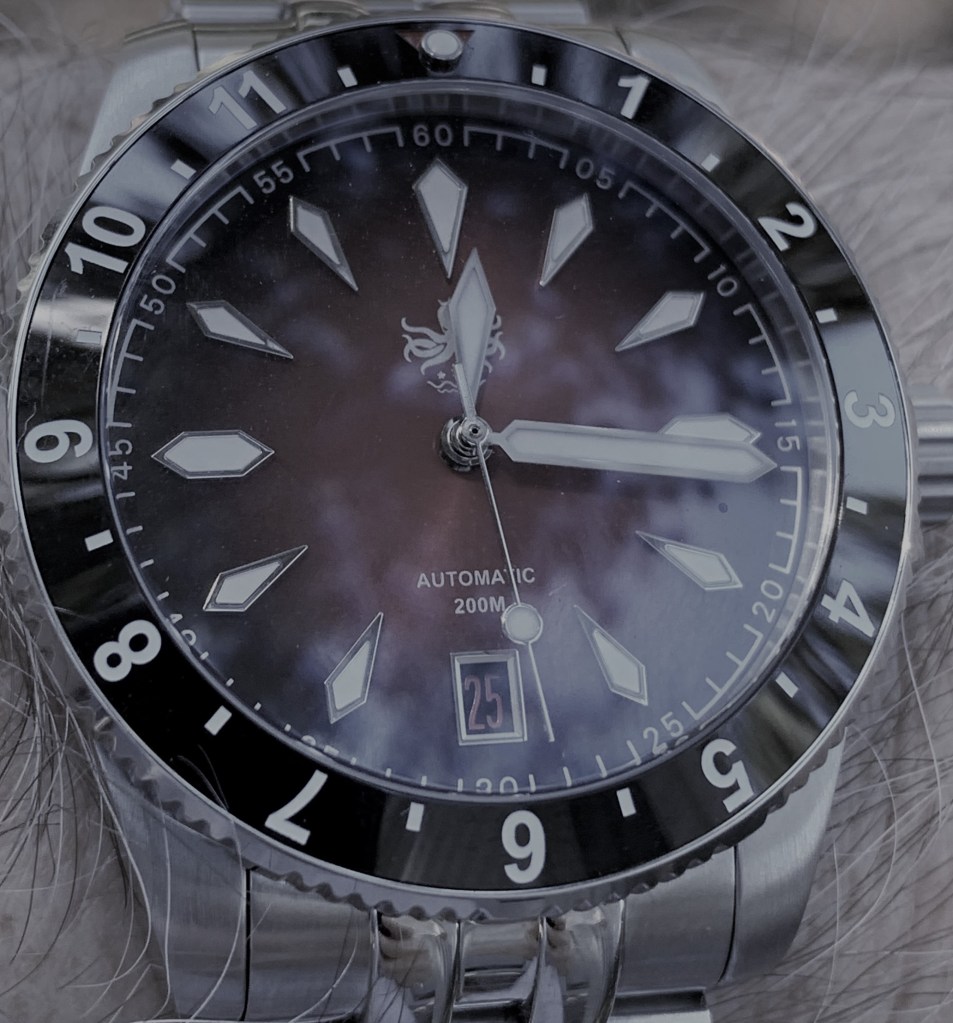
One last note, he believed that the originating material substance of the universe was water. This is usually treated as some sort of joke and to demonstrate the primitiveness of Thales’ philosophy. “All is water” is not really fair to Thales. Given what we have since learned about the beginnings of life, water appears to be a prerequisite. Fredrich Nietzsche, defending Thales, commented that Thales’ philosophy is not couched in theological terms and contains the thought that “all is one” that is necessary to modern philosophy. I take it to mean that Thales would have required at least two hundred meters of water resistance in his watches.

 The Escapement Room