

Greg:
Since I am a natural born leader (looking around in case I get struck by lightning) I will throw this one out. Most of us have more than a passing interest in vintage watches. What is the future of the vintage watch market? Are we at a point where it will be less of an option for collectors going forward?
Ryan:
I’m slightly worried at the direction the vintage watch market could take. Pricing is often downright crazy. I’m selling two lovely Tissots on behalf of my watchmaker (I haven’t mentioned them too much since I don’t want to garner the reputation of a used car salesman) both of which are listed at above 500 USD. Sure, not too much money, but my watchmaker had them laying around in need of some love and I was the one he chose to love them and put them on the market. We’re both making 100% profit. I would love some money in my pocket, but I would love some watches on my wrist more. That’s difficult for my budget and current job position, (manager of “I fix watches for friends and the like when I’m not busy with school, Pty Ltd”) which is sad, but ultimately something I’ll have to accept. I’m selling watches at a price I can’t afford simply because the market dictates so.
I love speaking to my watchmaker about pricing, because he is an island of sobriety in this great big sea of vintage watches. He prices a watch at what it’s worth. I have had many deals with him before. What makes my pin-pallet Lucerne Digital Jump Hour a 250 – 300 USD watch? Positively f***-all. I have owned it for over a year, so I know. Despite this, certain folks on eBay price them at the aforementioned price. This is probably proof of some economic law. Essentially, one guy decided one day that his cheap pin-pallet watch was funky enough to warrant a 300 USD price tag. Someone else saw this and then got infected with the same idea. Rinse and repeat. The market value of a product somehow increases, which somehow also increases demand or cache.
I hope we won’t reach a point where vintage watches become prohibitively priced and viewed as highly exclusive things, which most of them aren’t. If people keep pricing watches as they do, how will younger collectors get into this hobby? I started collecting because I was a young man with little in the way of experience or money, but given a lot through the kindness of others, most notably, my watchmaker. One person alone selling a watch at a lower price won’t revert the craziness that has possessed some sellers. That type of craziness has a name: greed.
Otherwise, more specifically, I predict Omega Genèves to remain as they are in the market, with maybe a slight (and I mean barely notable) increase in price one day. I suspect a lot more of them will be destroyed, because they are relatively cheap and thus appealing to newer collectors, who don’t always have the most experience and sometimes think that they can repair watches themselves. It’s good to practice, yes, but not on one’s own watch. There’s an Afrikaans saying I like for this, “’n Voëltjie mis nie in sy eie nes nie,” which means, “A bird never shits in its own nest.” Many of those Genèves are write-offs thanks to them basically needing to go off to the Omega service centre, as pointed out by Chris.
Despite having skin in the game with my Nivada Antarctic Spider, I pray that the bubble for vintage Antarctics bursts. They are only 1000 USD watches on a good day, and I mean the best of days, all sun and no rain sort of days. I have arguably one of the rarest models and I would feel scummy selling it at its current market value. Sure, there’s a rich history behind them, but they are still stainless steel watches with basic ETAs in them. People like my watchmaker remind me never to forget that.
Mumbai specials will continue to catch people out as will vintage pin-pallet skindivers. Quartz Omega dress watches and service watches will continue to be slept on, keeping prices low for people like me. In general, I think watches as a whole need to get a little cheaper. The current cost of spare parts is a killer and I suspect that many watchmakers are already taking shortcuts. What would the hypothetical small-town watchmaker do, spend a fair bit of his weekly wage on a spring that needs to be shipped from across the globe and will only arrive a month later, or dig around in his parts bin for a spring that, while not the right spring, will do the job well enough?
I think that without some degree of change, vintage watches will start to become more niche than they are now, which is sad. This constant greed only means that more lower-middle end watches end up in landfills or be essentially written off and sold on eBay as parts or non-runners without much chance at life. Sure, some vintage watches are utter crap, but, like people, I believe that they are all worth a second chance before being sent to the parts bin.
Chris:
I think vintage watch prices have gotten very silly of late, but they were always going to go one way. I am not naive enough to think it was always going to stay the same.
My concern still lies with the parts, people, repair triumvirate – the more years that pass, the more I feel this is really the only thing that makes vintage viable and worthwhile. Part restrictions by certain areas of the market is not a good thing for hobbyists, and yes, whilst there may be certified watchmakers still around, they are a dying breed. Eventually, to maintain a vintage top 20 brand Swiss luxury watch, the brands themselves will be the best way to maintain your heirloom, and at substantial cost. 13 years ago my Grandfathers Seamaster Quartz needed a new movement, and a certified repairer charged me £350 for a UK-based repair that took 4 weeks. Omega offered £450, with an estimated time of “f*ck you”. This was 13 years ago. Sentimentality is the ONLY reason I paid for a repair in the first place, any other watch and I’d have condemned it to everlasting rest.
I have watches that I can get repaired, and I have watches that cannot for a variety of reasons. Some simple (no parts, no point…), some more complex (no one wants to touch a vintage VC because it’s a museum piece, watch is too “hot”).
Whilst I will concur it is not the end of the road just yet, we are very quickly approaching the end times.
In 10-15 years’ time I feel that the “vintage” market will be filled mostly with 90s – 00s brands where you will have to rely on the brands to maintain and service. Outside of this, it will be mostly hobbyists and those watchmakers who have managed to train up replacements who will be able to maintain mechanical watches outside of the main economic channels. Note the word feel – please don’t get upset, it’s just my opinion.
I am very much of the view, now, that there are so many retro-inspired offerings that vintage might be folly now. I feel like a traitor saying this, especially since I am wholly invested into vintage by quite a margin, but if you were to use your head over your heart then there are so many more reasons to go retro over vintage. The charm is the main thing that will be lacking, but what value does charm actually have if the watch is unserviceable, and eventually undesirable.
Perhaps this is all just reflective of my current mood, but I am really beginning to enjoy reliability and the lack of fuss something like a Seestern or Thorn gives me over something more nuanced like an old skin diver, or an old dress watch. It is a skill to be able to find a cracking little Swiss jobber in the mire, and give it a new lease of life with the right strap and a little bit of Polywatch, as it’s taken 15+ years of messing about to really hit that high success rate and value proposition, but it is also very tiring and unrewarding trying to maintain that part of the hobby when most watch enthusiasts cannot even use Google, or struggle to understand simple spreadsheets with basic economic data. Perhaps I’ll buy a new Bremont and piss of the Christopher Ward crowd?
Greg:
Well, let’s get one thing out of the way explanation-wise: no matter in which country you live inflation is up, perhaps way up, from where it was just a few years ago. There are many reasons for this: a pandemic, a long period of historically low inflation (yes, everything ends eventually), and irresponsible governmental monetary policy. Even vintage watches are going to fetch more than they did just a few years ago. The rising tide will affect all boats in the harbor.
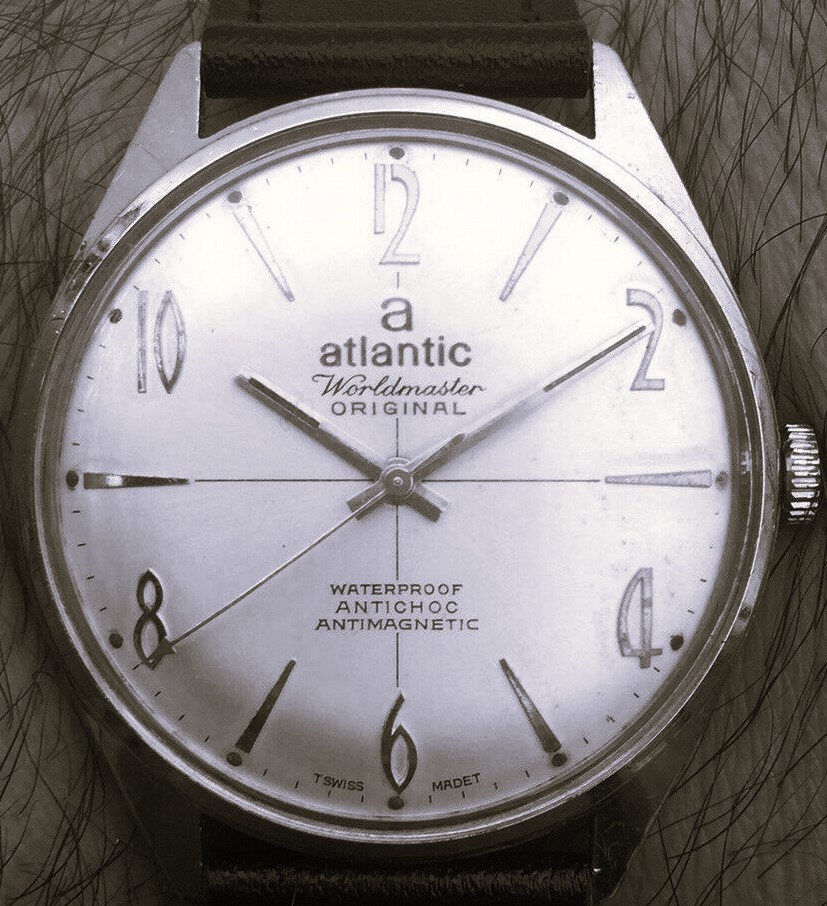
Apart from inflation, there are trends going in both directions. First the positive: the internet has created a market for online trade in vintage watches that has expanded the reach of the market and lowered the transactional costs. Just twenty years ago if you wanted to purchase a fifty-year-old watch your options were garage/boot sales, flea markets, estate sales, and the very few retailers that specialized in vintage. For those brick and mortar stores you paid the service cost up front (you still do). For those informal sales you just had to get lucky. Today there are several websites that will sell me an old watch in a wide range of conditions. I can search for an Atlantic Worldmaster in all stainless steel, and with patience, find one. The larger the market, the lower the price, in theory.
Here is where the internet market breaks down. Knowledge of watches is not evenly distributed. Brand recognition, especially for today’s hot tickets, will turn an ordinary 17 jewel movement watch into something worth hundreds of dollars. You can’t find a vintage Movado or Invicta for a reasonable price. There is absolutely nothing special about them except that superficial knowledge drives up their prices. Ryan’s Nivada is another example. A few years ago, you could find vintage Nivada for not too much. The success of the relaunched brand has reached back and dragged up all prices on very old models (well, maybe not the Mexican quartz Nivada).
The fun for me has always been to find the diamond in the rough, the nugget at the bottom of the mine. I have found Mido and Enicar that no one gave a second look at and turned them around with a minimal service and a health application of Polywatch. Those bargains are getting harder to find. (So, grab a Wittnauer like I counseled earlier.) Economic uncertainty has made many sellers fix a minimum price and have the patience to wait it out. I have been looking at an old Bulova for over six months. The seller has it at 100% more than it is worth on a good day. I don’t know if I can wait long enough. He or she only needs one buyer with more money than sense.
Every year there are fewer local watch repair options in any market. Watch repair is going the way of shoe repair. Seventy years ago, Gruen and Bulova thought this was such a crisis that they each founded training programs to put more watchmakers into the market. It is much worse today. I don’t know if repairing vintage is possible in more rural markets. The ease and expense of repair is the biggest barrier to entry to this part of watch collecting. I have it under control now, but I am not sanguine about the future.
I agree with what has been said above, especially about parts scarcity and the 1990’s watches coming back into fashion. This will be a boon for all those with Tags sitting in drawers. The problem will be that many sat with batteries in them, some of those batteries leaking and fouling the movements. There are some who hold the silly opinion that quartz watches can’t really be vintage (because “quartz” or something) and they try to invent words to describe them: neo-retro-post-vintage or the like. They are just vintage watches like every other. My grandfather’s 1983 Pulsar is vintage. And it still works (for now).

(Kaysia, Celine, and Sherwin were unavailable because they are in rehearsal for their comedic variety show “Watches, Watches, Watches!” that will premiere at the Bucks County Playhouse in New Hope, PA on June 16, 2024. It will be a limited run.)

 The Escapement Room