

I think it’s safe to assume that many–if not most–watch collectors “get” vintage. They may not buy vintage or prefer to wear vintage but a big part of the enthusiast population understand the appeal of vintage. Look at the articles on this website and you’ll see an almost palpable passion for and around vintage watches–their histories, familial connections, linkage to a glorious past, their beauty and relevance on full display for everyone to ogle at.
I too have talked about my love for very old shiny things here and elsewhere. I gravitate towards vintage aesthetic to almost the point of snobbery. I can’t stand the phrase “vintage inspired.” I find the concept unnecessary and maybe even unseemly. If one loves vintage, why not just get a vintage? Why buy a modern watch with an outdated design? I do understand it somewhat. Collecting vintage watches can be intimidating and the pitfalls are a-plenty. Buying something new reduces the risks considerably. New materials might also make them more attractive, perhaps maybe even more durable. Why get acrylic when you can get sapphire? Why buy a battered Seastar when you can get a PRX?
Anyway, I’m not here to discuss how one can go about collecting vintage watches if that’s where one’s interest lies. Like I said, there are enough articles here on this site and out there on other spaces the how‘s of vintage watch collecting. This one in particular answers most of the questions you’ve never even thought of asking about getting into vintage.
Instead, what I’d like to put forth here is the case for using vintage watches as daily drivers. This aspect of collecting is not covered enough I feel.
This isn’t scientific but I think there are two kinds of vintage watch enthusiasts I think. The first kind is the person who actively pursues vintage watches because something about them resonates. Like I mentioned earlier, it might be the history of the watch (this watch was the first watch to use a microrotor in the movement) or its link to a historical event (this watch was worn by the first man to step on the moon) or it might be the appeal of old world aesthetics (this watch is a prime example of art deco that permeated in the early 21st century). The second kind of vintage watch enthusiast had vintage thrusted upon them by either inheritance or personal discovery (ie, finding something unusual at a flea market that they have to have). Both kinds may stick to one or two pieces and call it a day. However, many find themselves falling into a rabbit hole of incessant hoarding of old old watches. I’m curious to find out how many from both kinds actually wear their vintage watches on the regular and if they do, what’s the rationale behind it.
I know someone who’s into vintage but rarely wear them, choosing instead to use her more modern watches on a day-to-day basis because of fear that she might break her grandfather’s World War 2 Omega. She would only wear it on special occasions, which is a pity because it’s gorgeous. Before her grandfather passed away, he took the time and effort to get a customized steel clamp bracelet made that fits her wrist and only her wrist.
I can only speak for myself, of course, but I do wear my vintage watches everyday. They are my–here’s another term I dislike though I can’t exactly explain why–GADA or go anywhere do anything watches. People who own vintage pieces (whether through active curation of “key” pieces or gifted to them by a relative), who don’t wear them for fear of scratching or banging them, accidentally getting water inside them, are missing out.
Vintage watches are something else entirely in that they transcend preconceived notions of how watches should be worn.
First, they transcend fashion. There aren’t a lot of sartorial scholars among watch collectors. It’s not uncommon to see someone wearing a bright yellow GShock with their navy blue suit. The anti-conformity anthem of “wear what you like. Your wrist your rules” is sang every day by watch collectors before stepping out in public. So, fashion is not something that worries the collector. And yet, just because you deny the existence of something doesn’t mean it ceases to exist. Fashion conventions exist. You can scream social construct all you want, that construct isn’t going to go away. People will still look at you. People will still judge. You don’t care? Fair enough. To those who do care (and I hope there are more people who care about their presentation to the world), specific watches go with specific outfits.
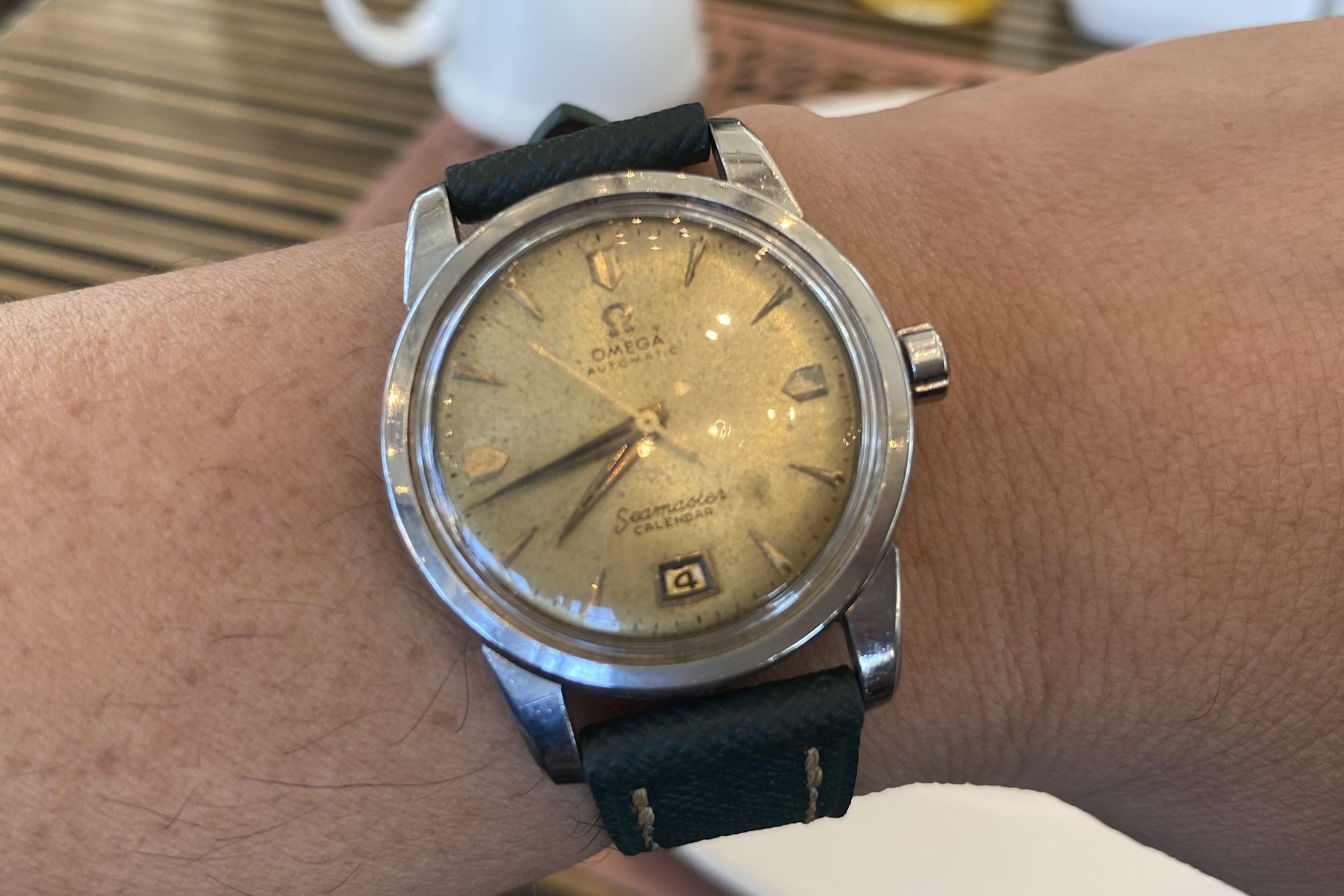
Except, vintage watches transcend fashion. By this, I mean they are the exception to these pesky social constructs we staunchly deny have no impact in our lives. Except, that’s actually true with vintage watches. The strictest dressiest of dress watches from the 1930s can be worn as dressed down as you like. It will look good, I promise. Same with the sportiest of sports watches from the 1950s will look good in a business suit. How is that possible, you ask? Vintage watches defy trends because they had ceased being about fashion a loooong time ago. If you’re wearing an old watch, you’re as far away from of-the-times as you can get. So, for me anyway, the easiest thing to pair with my outfit whether I’m going to the mall or to a swanky restaurant is a vintage watch.
Second, vintage watches transcend branding. Whether we like it or not, brands are hierarchal. Brands are often judged through the lens of their price point. With vintage, price is rarely talked about. Yes, some watches are more expensive than others. Of course they are. A simple manual winder that has Patek Philippe on the dial will cost more than even most modern watches that are not in the same league. But when discussing vintage, the usual clichés don’t get mentioned, i.e., punches above its price point comes to mind. Instead, when price does come up, it’s usually in the context of how much that particular brand and model go for in the marketplace. A watch is judged by its own merits, often only considered within the context of its own history. How old is it? What’s the condition like? Has it been serviced? Anyone fucked with the dial?
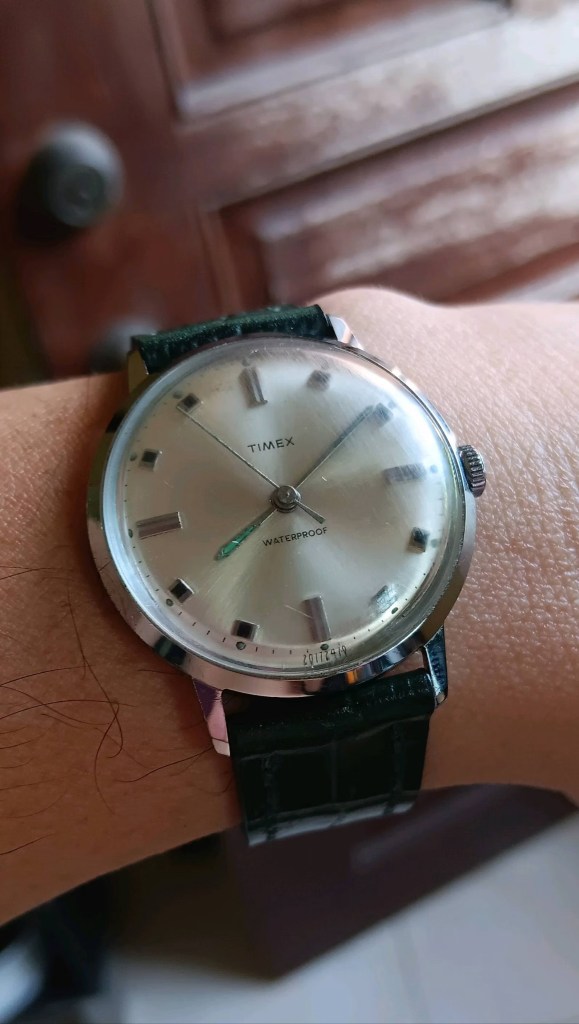
A vintage watch will almost never be perceived as cheap, despite the brand on its dial or its actual market value. A Westfield from Bulova from the 1940s will be just as glamorous and impressive as an Omega from the same decade. They won’t cost the same but they will get the same adoration from the muggles. The modern Timex Marlin may have to compete with the Orient Bambino but a 1960s Marlin is in a class all on its own.
I find myself scratching my head when people are overtly careful with their vintage watches because they’re believe these pieces can’t survive outside their watch boxes. As if vintage is so delicate. Actually, they’re not. Okay, you can’t get it wet because water resistance is questionable in vintage pieces. But, aside from that, vintage watches are fine to wear in most regular daily situations. You can’t go spelunking with vintage, sure, but you shouldn’t treat it like a newborn babe either.
There’s certainly a case to be made for wearing it at a desk job. These watches have been through more than most of us have. A knock on the door knob wouldn’t matter as much as it would on a brand new watch. Greg, one of the proprietors of the Escapement Room, likes to point out that vintage watches are living on borrowed time already. They’ve passed their expiration date a long time ago. Those are not his exact words so please allow for some interpretation. Entropy is very apparent in vintage–the discoloration, the patina, the corrosion–these are signs that a watch had been used and over used and still continues to tick. But it will stop ticking someday. All things succumb to entropy. Nothing lasts forever. So one shouldn’t worry about keeping your grandfather’s watch pristine. Wearing it regularly would be more meaningful. And they will survive an average day at the office.
Unless I blowtorch my vintage watches, they should be fine to tick another day after I use them. Additionally, having them regularly serviced keeps Fenrir, the great wolf, at bay at least for a short while longer. From that perspective, wear and tear should mean nothing when wearing a watch. What’s another scratch?
So, to end: wear your vintage watches daily. Make your ancestors proud and/or flex that flea market treasure find. If you already own it, wear it. If you don’t, buy it. Embrace and enjoy the glow of being the suave and sophisticated beast that you are. Take a risk and make your every day stand out.

 The Escapement Room
I agree with everything said here. People seem to think of wearing a vintage watch as being akin to driving a vintage car around in modern daily traffic. This is not true. They do not have multiple systems at risk of breaking down. The technology of releasing spring tension through a gear train to measure time really hasn’t advanced all that much, and that’s basically one trick as compared to the Rube Goldberg device that is an automobile.
Subscribing to the ‘rolling stone gathers no moss’ school’ I favor preservation by continued use as opposed to hiding it away and hoping time stands still. As with cars, one can enjoy the item and have it seen and asked about, or just have it tucked away as a hidden object of unshared covetousness. Aesop’s fable of the miser and his gold comes to mind.
I’m squarely in the second camp of inherited and/or like the looks. I don’t even know the model or reference of half of my vintage watches. I’ve also previously felt that vintage timepieces are a stylistic skeleton key that just always work with anything.
The number of people that shy from service is amazing. I see myself as a patron of the arts when I frequent a watchmaker. They need preservation through use as well.
LikeLiked by 1 person