
Watchmaking is broad. A watchmaker is expected to be in command of the skillsets of the engineer, the jeweller, the businessperson and even the artist. How much a watchmaker is expected to know of each of these facets is determined by his or her customer base as well as his or her willingness. Many watchmakers simply know how to service movements and leave the polishing and refinishing to skilled jewellers. A true small town watchmaker, like my hero and mentor, needs to be competent in all facets.
The artist? I bet you’re wondering about that.
Sure, when you study to become a watchmaker, they don’t hand you a tin of paint and a paintbrush and say, “here you go, repaint this dial.” I mean, sometimes they did, in the past, which is why redials are so common and oftentimes so poorly done, but it’s not really expected of a watchmaker to know about things like this. I find myself taking extreme joy in wielding a paintbrush. My uncle gave me a very fine Kolibri brush some years ago. I used to be into scale modelling, but that never really worked out. My uncle is a guru with these sorts of things and some of that skill has rubbed off on me.
I painted over a Chinese Standard Movement once for fun, because I was bored. I painted little hearts and patterns on the bridges in bright colours. It looks like a hippie was let loose in there and it also looks admittedly shit as soon as a loupe is pulled out. I thought it was a great use for a fake watch, and it was. I learnt some of the basics of working at such a small scale. I’ve applied this to my Oris.
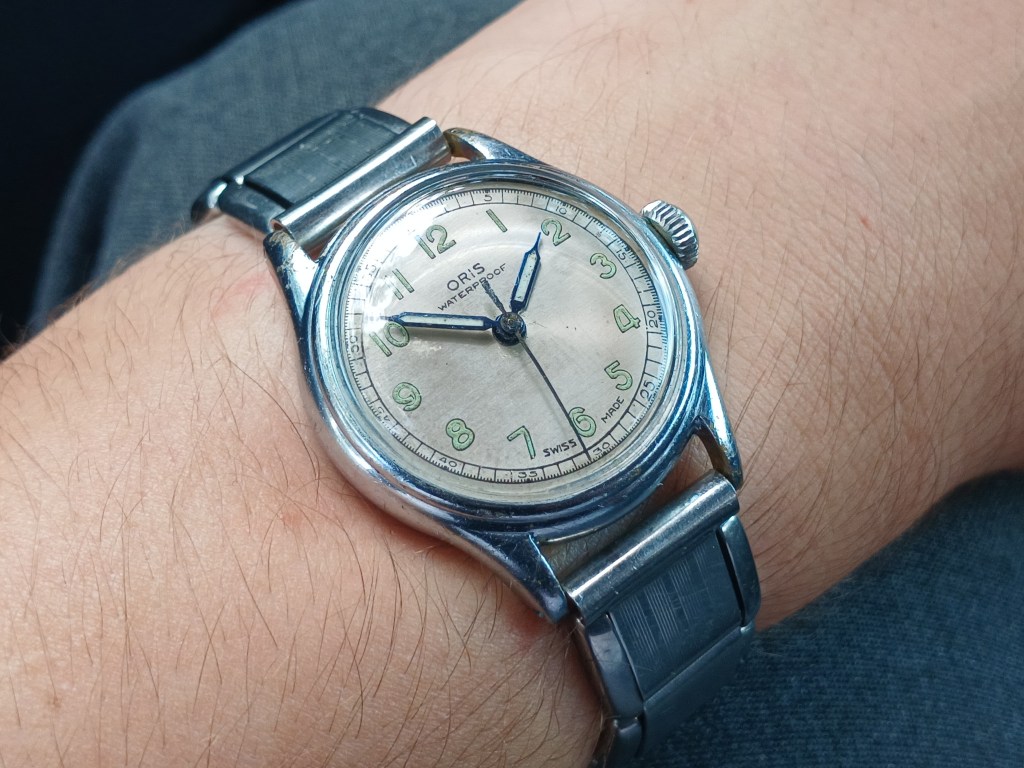
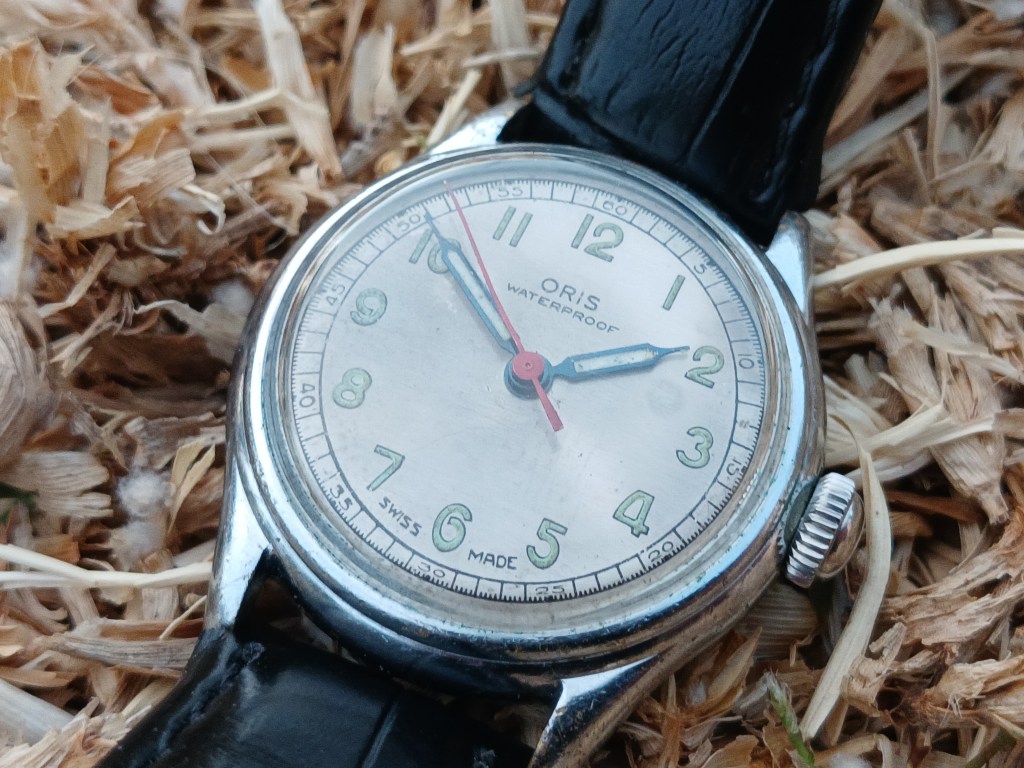
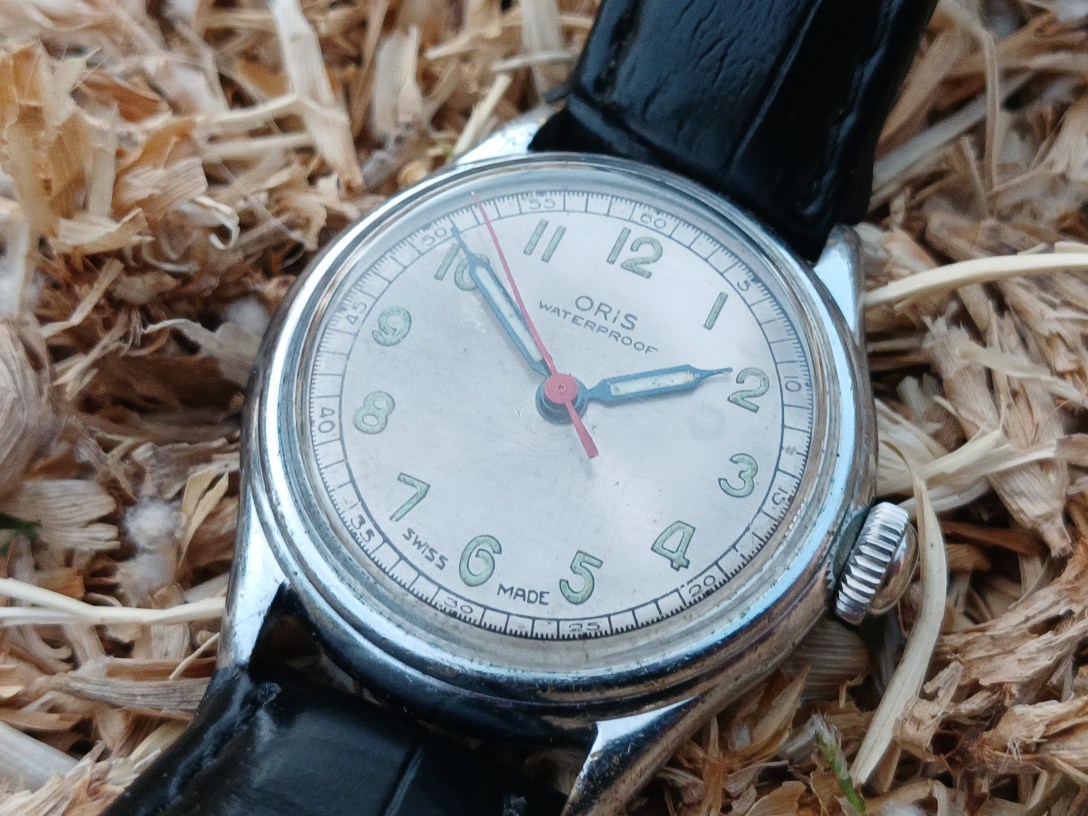
As you can see, the seconds hand is now red. It’s probably not the best and would have maybe looked better if I had airbrushed it. I didn’t airbrush it because I did this job at quarter past midnight under the influence of tunnel vision and mind-numbing sobriety, so I didn’t want to wake the household up with a compressor or cause myself any excessive effort. When this watch was made, the hands would have been hand-painted anyways. It’s by no means perfect, but I think I did a pretty good job.
When I bought the watch, the hand was black. Upon cleaning it earlier this year, I came to see that that was due to decayed paint and minor corrosion. I sanded the hand down to the bare brass and fitted it, putting the job of repainting it on the back burner. The watch would have originally had the seconds hand painted red as far as I can tell from similar watches, so that was the colour I chose. Do I like the red more than the black? No. The black would look better if it was executed well, unlike the furry, almost mouldy texture of the hand previously. I am obsessed with originality and order. If the watch was originally supposed to have a red seconds hand, it will have a red seconds hand.
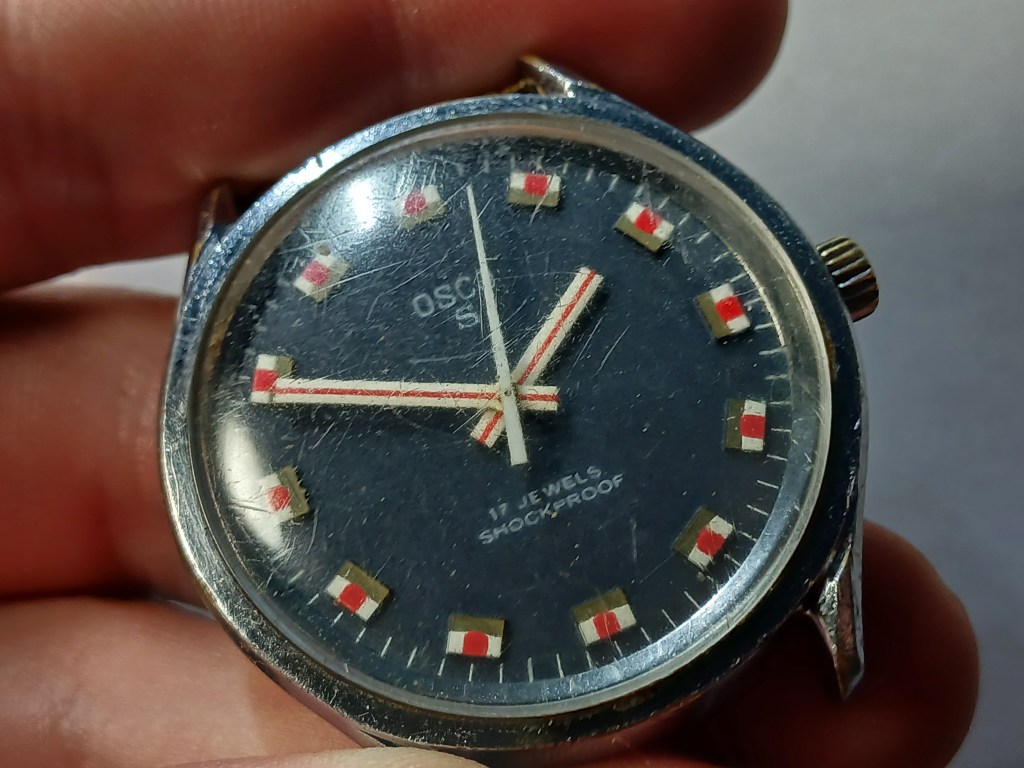
This is all that this post is about, me painting hands. It’s fun. I scratched up the seconds hand on an old Osco a day or two ago and repainted that as well. That’s not as good as my Oris, but that is only apparent under a lot of magnification. Besides, a cheapish German watch wasn’t perfect coming out of the factory. It’s the littlest details that make a watch better. I’m never going to sell this Oris, as I want to live to see it reach a hundred years old. I’ll be going through a midlife crisis then. The Osco I do wish to sell however. It needs a hairspring and a strap. I’m hoping to turn a profit on it.

 The Escapement Room