
“Invicta causes anthropomorphic climate change and that’s why I wear an eighty-year-old Gruen.”
No, that’s not what Sherwin said, and perhaps that is an unfair characterization of his point, but it gets at the general premise. More charitably, “wasteful spending on watches is harmful to our environment”, may be closer to his argument. “Wasteful spending” is known to be in the eye of the beholder, but let’s accept for purposes of argument, that there is a certain number of watches that are useful, or even needed, and that everyone who writes on this site has blown through that limit years ago. It was a stop sign that we just didn’t see. Any excess watches, in my case more than fifty, are superfluous and arguably “wasteful”. Should I atone for my sins against the environment?
Let me start with the usual throat clearing disclaimers: I believe that the climate is changing, and I believe that man’s activities, both in the present and in the past, have contributed to a rate of change that is above the rate that would be expected from normal processes. I will go further and say that I believe that the rate of change attributable to man’s activities, as much as the change itself, is harmful the environment. (I must also note that the environment is more durable than we give it credit for being: forests, even rain forests, return. Natural habitats can be reestablished. The exception to this is large scale mining. That is a problem on a geological scale.)
Here I will add that this is watch content. It is designed to be consumed by people who are interested in watches and therefore any large world problem when viewed through the lens of watches, the watch industry, or watch collecting, will be distorted by that perspective. There is always going to be an equal measure of tendentiousness and folly in making everything about watches. Human trafficking cannot be solved by buying a Hublot, it would be foolish to argue otherwise.
When talking about the world environment, the climate, we always discuss the problems and despair solutions to those problems. The problems are real, even if they are not easily proven. “Scientists say” or “studies say” is the usual lead for news stories about the environment. Has climate change made hurricanes stronger, more common? A fair and even-handed approach to those two questions will lead to ambiguous answers. Certain models do predict that hurricanes and cyclones will become more cataclysmic, but we need much more data to prove either contention. Last week’s storm is still just weather.
Human beings see things on a human scale. We have had accurate weather data for less than 150 years in some parts of the world, much less for most. An active hurricane season in the Atlantic is just that. In our human scale we can just compare it to what we remember from recent years, or 1989, 1934, or 1911. The rhythms of Atlantic storm activity follow a longer trend than our lifespans. We are just in the infancy of identifying the problem. It follows that ready-made solutions have not manifested themselves to us as yet.
To complicate matters, man’s activities are not controlled by any governing body. We have different problems in different parts of the world for many historical and economic reasons. As I discussed in an earlier post, most of the world’s plastic pollution problem in our oceans is caused by a handful of countries in Asia. Argentina is not the problem, nor is Canada. Carbon pollution is also not evenly distributed. Carbon emissions in the United States last year were at the same level that they were at the end of World War I (and that was achieved with all those millions of cars on the road that didn’t exist one hundred years ago). The United State has done this through technology. There are emissions devices in car exhausts and scrubbers on smokestacks. You can say that we aren’t doing enough, but you can’t say that we aren’t doing anything. Carbon emissions are being driven by the emerging economies of the world. These countries don’t want the U.S. or Europe to tell them that they can’t have the benefits of industrialization and the standard of living that it produces. They can ‘t be forced to be good wards of the earth, and to date, they can’t be cajoled. Is lifting a large portion of the world population out of poverty a moral good even if it befouls their air and water? In the West we took that bargain. Shouldn’t the rest of the world have that opportunity?

(Number of oceans saved: 0.)
But, if I don’t buy that Seiko 5, I can do my part, right? Not so fast, scale has an effect too. We know that one recycled can does not make a difference. However, if whole communities recycle aluminum, then we can reduce environmental harm and increase efficiency. Do you have any construction going on in your city or town? Are there cranes constructing an office tower or apartment building near you? Consider this: the entire watch industry consumes 9000 tons of steel a year, every country, every brand, all combined. There is more steel in a ten-story office building. Chances are that the entire output of the world watch industry is being put into new construction less than ten miles from where you live, in any metropolitan area worldwide. Not buying the Seiko 5 is the equivalent of recycling that one can.
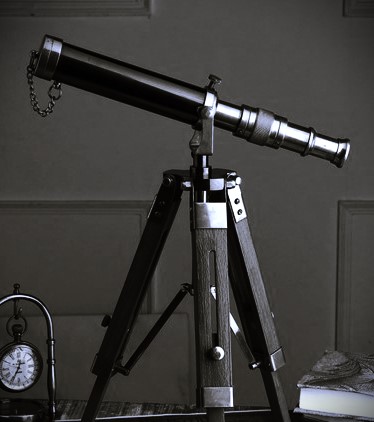
When climate or environmental issues are viewed using the watch industry as a starting point, we are looking at the telescope through the wrong end. There are more pressing issues and sources of pollution in each of our localities: runoff from agriculture, untreated waste, coal ash from power plants, it is a long list. After all, this is at its base a pollution problem. When we tackle the pollution at its source, and reduce or eliminate it through technological means, we make a meaningful contribution to the solution. Making small symbolic measures will not make a glacier healthier. And sometimes our solutions are that in name only. For example, we are experiencing our third deforestation in the West: the first was for agriculture/ranching; the second was for paper and building; and now when we have built our forests back to a size not seen in living memory, we are again cutting them down in parts of the world for solar farms.
Buy or don’t buy a watch. Your choice. But, if you think that it is a moral choice, perhaps reflect on the fact that sumptuary laws or an abhorrence of luxury have a long tradition in our culture, apart from any of the world religions. It is a denial of desire. It is to be a watch ascetic. I am not ready to kill off the watch industry through collective action. It doesn’t need the help.

 The Escapement Room