
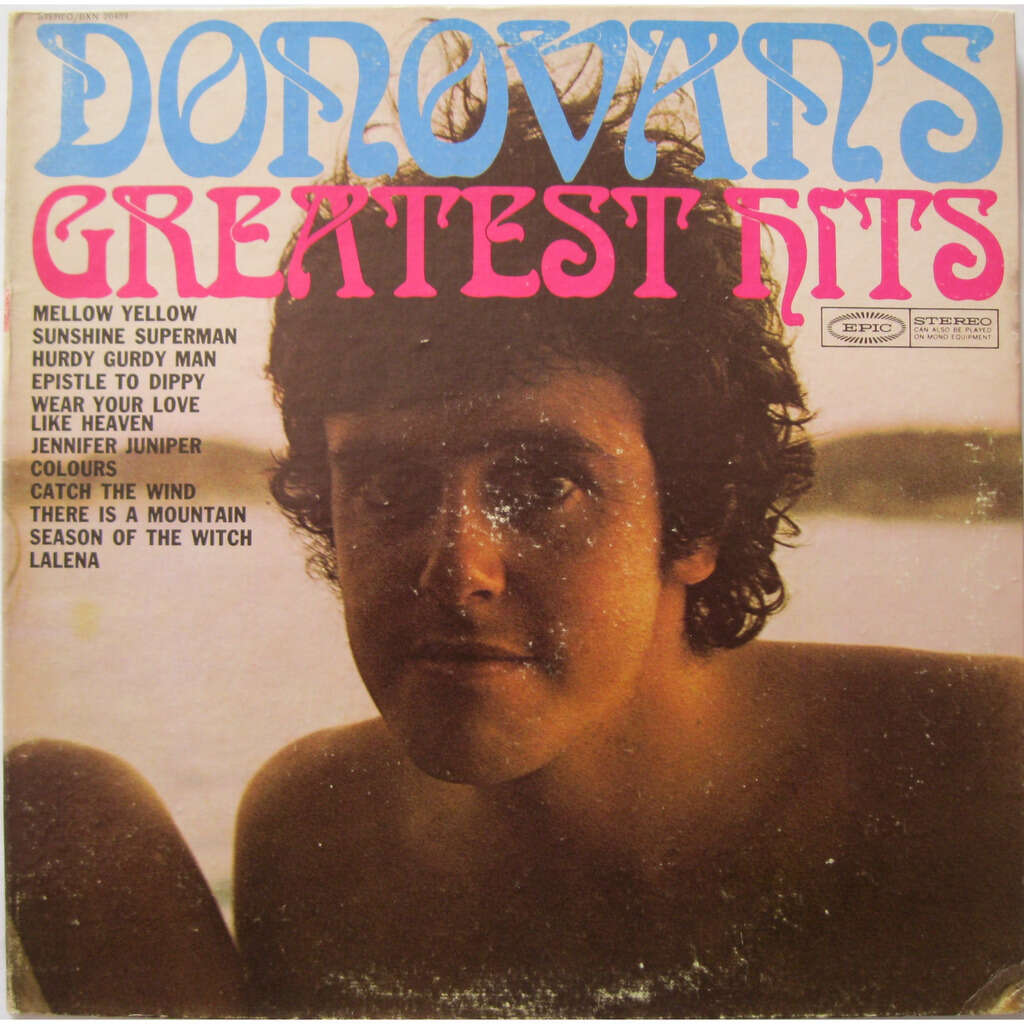
When I was sixteen, right at the start of summer, I did something profoundly stupid. It involved alcohol and paramedics. My parents rightly punished me. The original idea was to ground me for the whole summer. I would be relegated to mowing the lawn and watching television by myself without my friends, going nowhere. This was an era where we went to record stores and bought vinyl. I would save up to buy two or three albums at a time. I would listen to them repeatedly until the musical cues and lyrics were burned into my memory. A month later, or perhaps longer as finances would allow, I would acquire more. When I was banished to my basement bedroom I was cut off from new records. I had just purchased a collection of Donovan’s greatest hits. I set about to memorize it.
When I bought albums, I would buy the latest, usually containing the song that drew my attention to the artist or band. I would also buy the first album. If I liked both I would fill in the catalog. Yes, I was a conscious collector back then, with a strategy. Certain artists did not receive this completist approach. With my limited budget based on mowing lawns and summer jobs, some only got the “Greatest Hits” treatment. The Greatest Hits approach could be modified upon learning more about the music. Originally, Ten Years After was a Greatest Hits band. By the time that I gave in to streaming services I had expanded my holdings by six or seven albums or CDs. Donovan Leitch, the Scottish answer to Bob Dylan, was always a Greatest Hits kind of guy.
I retreated to my room to ponder life, feel sorry for myself, resolve to never touch a drink again, and listen to the greatest hits of Glasgow’s finest. This album contains some absolute gems. There are two versions of “Catch the Wind” out there. I prefer the Greatest Hits version. I like Deep Purple’s cover of “Lalena”, but the original is better. “Jennifer Juniper”, written about Pattie Boyd’s sister, is a standout. I really like them all. I was locked in with this record as my only solace. After all of these years a particular lyric still stands out to me.
The chorus of “There is a Mountain” has been gently, and not so gently, mocked, at least by American teenagers. Written at the beginning of Donovan’s lifelong immersion in Asian mysticism, the song contains the line: “First there is a mountain, then there is no mountain, then there is.” Like many a George Harrison lyric, I knew, even as a teenager, that Donovan was closely borrowing from a source. But fifteen years removed from any Creem or Rolling Stone article or interview that might explain it, and well before the internet, I could only guess as to what the song was getting at.
The internet has solved this knowledge problem. Donovan was quoting D.T. Suzuki, perhaps the Twentieth Century’s leading extoller of Mahayana Buddhism. I read a little Suzuki in college in a lecture course on world religions. He was less in favor by then. More specifically, he was paraphrasing Suzuki’s translation of Qingyuan Weixin:
“Before a man studies Zen, to him mountains are mountains and waters are waters; after he gets an insight into the truth of Zen through the instruction of a good master, mountains to him are not mountains and waters are not waters; but after this when he really attains to the abode of rest, mountains are once more mountains and waters are waters.”
By this point you may be thinking, “ok, how does this relate to watches?” Patience young grasshopper, just getting there.
Most of us remember a time when we wore one watch every day. It wasn’t a gloried “GADA”, it was just a watch. Maybe our parents or significant other bought it for us. We wore it with suits and jeans. It did what it needed to do. It gave us at least the time and maybe a little more. With changing fashions and gifts, we all expanded to having a few watches. Sometimes we specialized, wearing a certain watch for a certain purpose, like having a watch reserved for hiking or date night. Once watches were put into categories for use, we saw the expanse of categories and the unlucky few of us began to collect and acquire.
We euphemistically call our changing tastes and desires a “journey”. I have always resisted that label as imbuing crass consumerism and addictive behaviors with a gloss of a philosophical life well-lived. A “journey” implies a destination. Most of us are just tweaking with watches.
First it is just a watch. Then it is not a watch. It is more. It is a lifestyle, it is an image, it is a collection, it is a journey. Qingyuan Weixin may have been on to something. Now, where are we? Well, maybe it is just a watch after all.
What does the final stage look like? Chris has called it “apathy”. This implies not caring about watches, brands, new releases, forums, YouTube videos, the industry, etc. Here I quibble with Chris’ term. I think that apathy has a negative connotation. It is more of a lazy indifference. That is not how I imagine an enlightened state. The freedom from want is more aspirational. This is why I quoted David Berman in the last Round Table: “And the end of all wanting, Is all that I’m wanting, And that’s just the way that I feel.”
Berman is channeling an old thought. It is the wants and desires of man that make him a captive. Berman could not bear the captivity, and his story ended sadly. Epictetus put it this way: “Wealth consists not in having great possessions, but in having few wants.”
We have all seen friends or acquaintances from forums work themselves into a buying frenzy. We sit on the sidelines, like silent sages, and think “Wait, don’t.” They wouldn’t or couldn’t listen to us if we said something. They haven’t made our mistakes or gained our insight. When someone asks which of these watches they should buy, the correct answer is always “neither.” But we are called an ass if we say that.
When we gain insight about “this hobby” it ceases to be a hobby, an activity. We stop checking new releases or scrolling auction sites. A watch becomes just a watch, and we are wealthier for it. I am not quite there yet, but I am working on it.
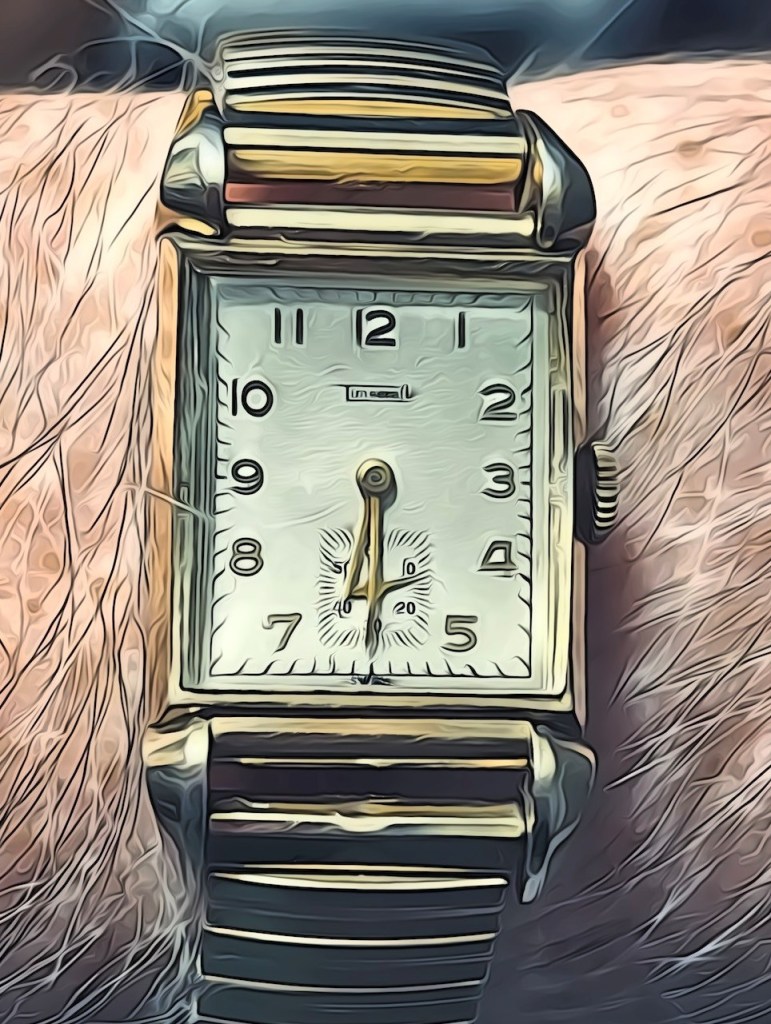
(Just a watch.)

 The Escapement Room
I would stick with apathy. Genuinely not giving a crap is an enlightened state. Consider it horological ego death. The realisation that buying a Rolex makes you one of many, rather than the few, is one that has not yet trickled down.
LikeLike