

In one of the most convoluted myths of the ancient world, Theseus traveled to Crete, slew the Minotaur, and returned the children of Athens to their home. Along the way he seduced and abandoned Ariadne, who gave him valuable assistance. According to Plutarch and others, the Athenians kept and repaired the ship and sailed it once a year to Delos to offer sacrifices. Every time a board or plank needed repair the Athenian craftsmen would fashion a new part until, centuries later, it was unclear if any of the original ship remained. It was also unclear if answering the question mattered at all.
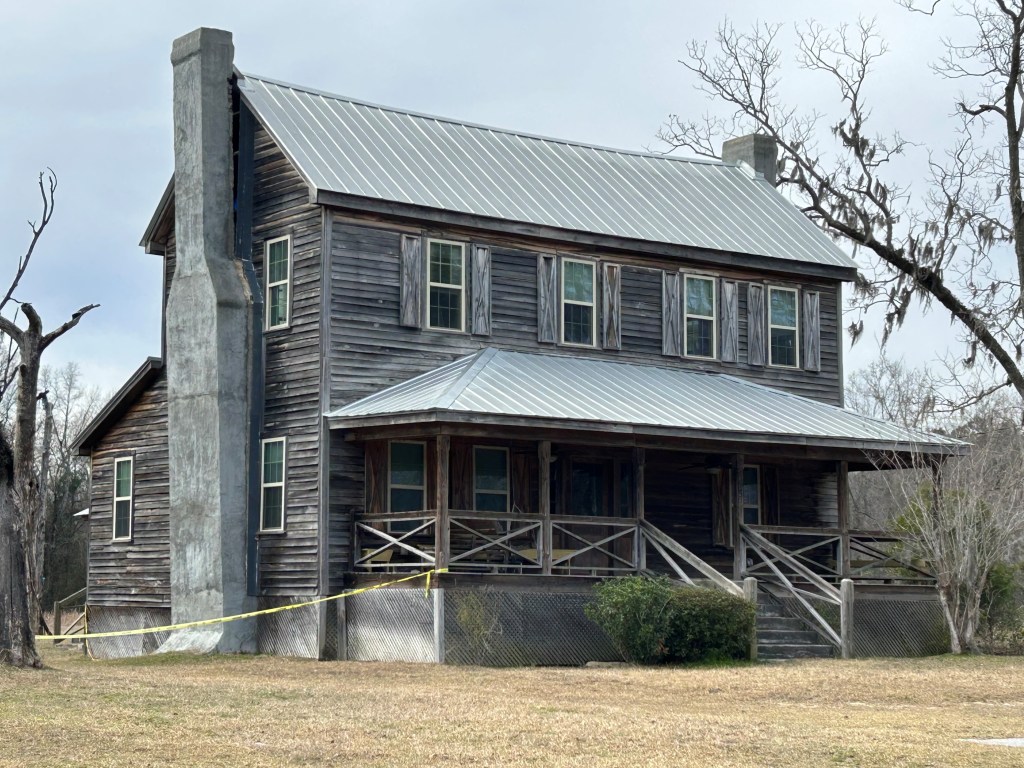
I am reminded of this paradox nearly every time that I pass this house near to me. It is the Gilbert-Clayton House on Wire Road. Wire Road was originally a Native American trading route of the Kusso people through what became known as the Four Hole Swamp (actually a river). The road got its name when the telegraph line was laid in the 1870’s. The Gilbert-Clayton House was a boarding house and stagecoach stop on the way from the coast to the interior. It has been in the same family since Reconstruction. There are many pictures of this house online (this one is mine from this afternoon). Sources say that it was built in 1854, or earlier around 1830. I prefer the earlier date as it comports with building styles like a house further up the road a bit from 1800. In each of the older pictures you can see repairs in the cladding and around the piers. Some photos show evidence of what is probably milk paint, especially under the porch. Shutters come and go with the decades. So, is this still the Gilbert-Clayton House?
What else would it be? A historic house is not merely the sum of every board, door handle, hand cut nail, or brick. Nearly no parts of the U.S.S. Constitution or Constellation are original (for the Constellation, it is not even the same design of the original ship). The house remains even if its parts are replaced over time. The house is separated from the sum of its component parts.
So is a restored or repaired watch. I think that in the watch collecting world too much emphasis is placed on originality. If we use and wear these watches parts will need to be replaced. Here is a 1940’s watch that I have had the mainspring and the crystal replaced. Of course, it is on a different strap or bracelet. The lume looks like it may have been redone sometime in the last 40 years. It does not have that black look that old radium lume acquires when exposed to moisture, and cracked acrylic crystals let in moisture.

When I see a vintage watch that looks too pristine for its purported age, I suspect a re-dial. The question, to me anyway, is what is the the quality of the re-dial? A clumsy or historically inaccurate redial ruins a watch. (That is not an absolute, not all original dials deserve to be hung in the Louvre.) I don’t think this watch was redialed. It is an obscure brand. I think that it likely sat in a dark drawer. Vintage Hamilton is where I see the most frequent redials. Millions of watches were produced and Hamilton values are consistently higher than other American brands. However, time has not been kind to many older models. Old oils and grime have taken the thin veneer off of the dial plate and sometimes only a professional redial will bring a watch back to wearability. I think that there should never be a “no redial” rule with our watches. We want what is the most beautiful. When “patina” becomes “water damage” we should set all strict rules on originality aside. We do the same for cars, pens, and anything else that we may collect. Put it in a glass case if originality is your most valued attribute. I have never understood the toy collector who keeps something in its original box far away from any child that might play with it and enjoy it for what it is.
How much of ourselves is still “original”? Most of our cells regenerate after months or years. Only certain specialized cells can remain our entire lives, like brain cells. Most cells for most parts of the body are completely replaced in about a decade, some sooner. How much of the 16-year-old me is still here?
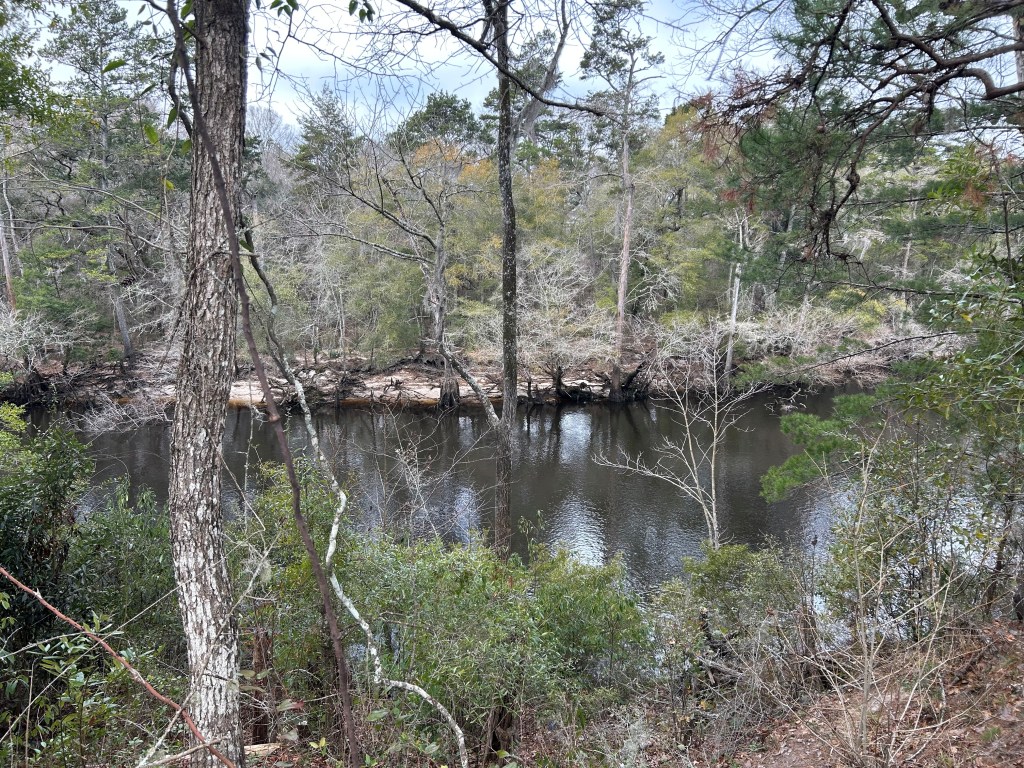
I took a walk on limestone bluffs over a blackwater river to think through this puzzle. The Carolina Jessamine is late this year. The red maples are too. We are about to enter pollen season, oaks and then pine. It was colder today than yesterday. I knew that very few people would be on the trail, and it would be quiet. I only saw a couple of Northern Bobwhites. I had to look at a guide book. All brown ground birds register as “grouse” to me.
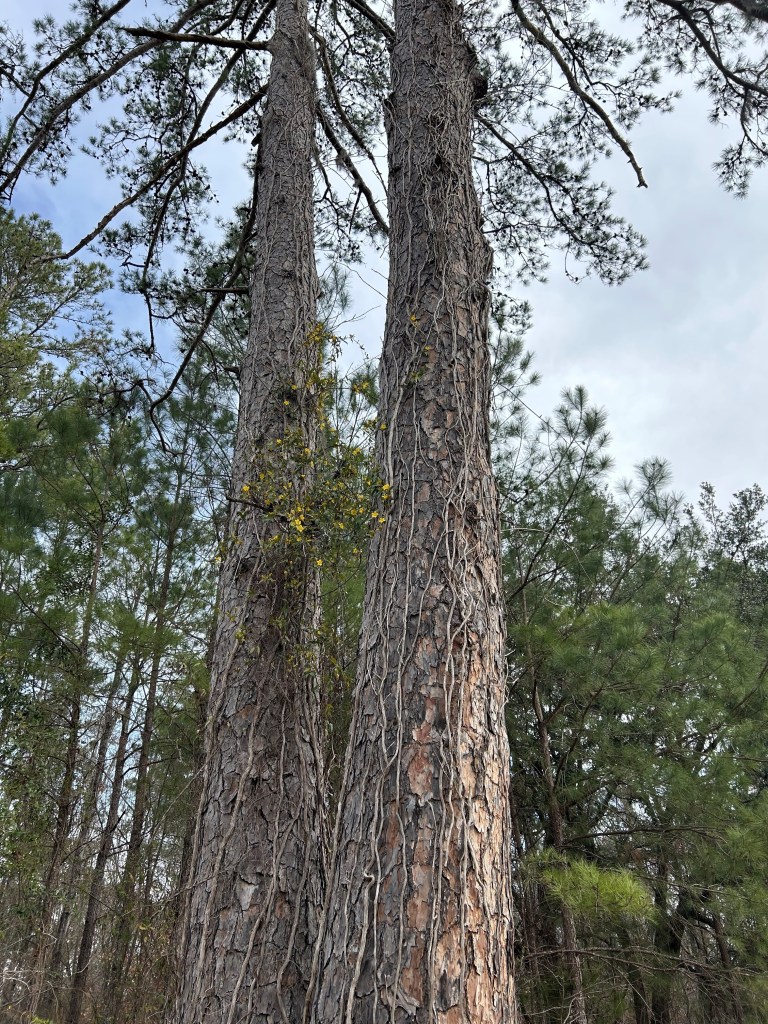
A few months ago, I reconnected with an old friend. We hadn’t talked in a decade and then we had two in-person meetings in just a few weeks. His mannerisms were still the same. We remembered the same inside jokes that we had shared in high school. He was the same, yet different. Sure, our paths had diverged but we both still had a bit of the teenager class clown in us. Finding an old friend who is still a friend, is a great thing. Tonight, I am going to write his widow about my memories. A walk in the woods helps clear one’s head.
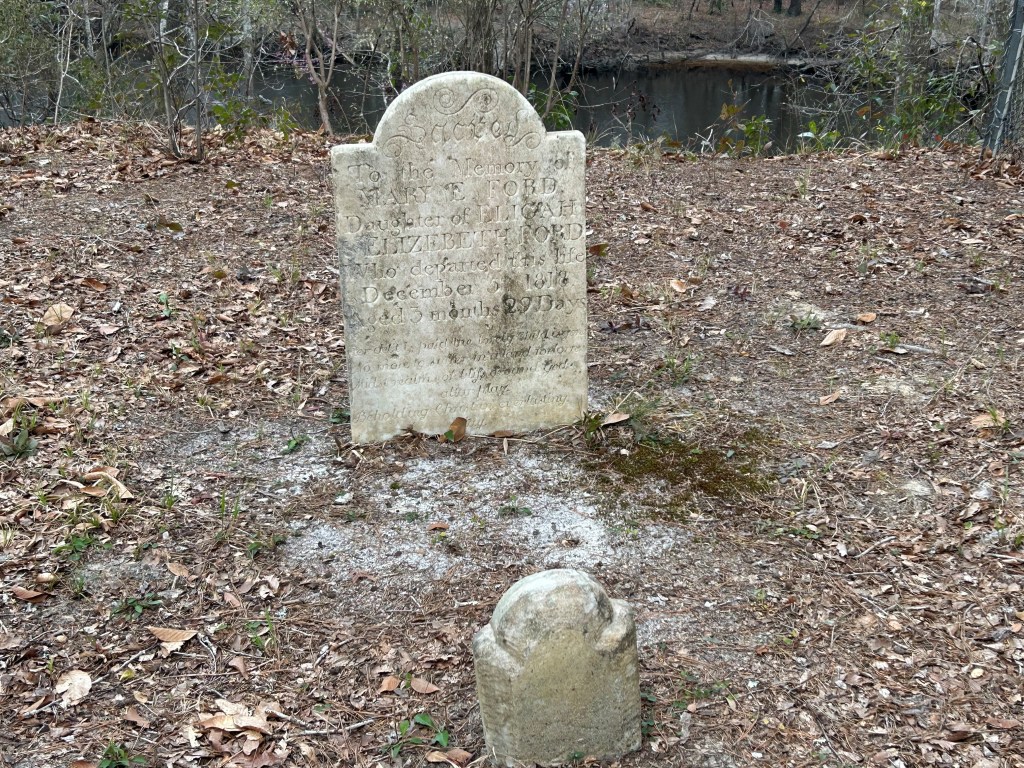
(Here lies young Mary on a bluff over the dark river. I wonder if in the intervening years we have invented a vaccine that would have let her live more than 3 months.)
I started writing this a week ago. The ending changed. Watches, right? Write something about watches.

 The Escapement Room
Good read. You’ve given me something to think about relative to buying vintage watches. Thank you.
LikeLiked by 2 people
That was a beautiful read my friend❤️
LikeLiked by 1 person