
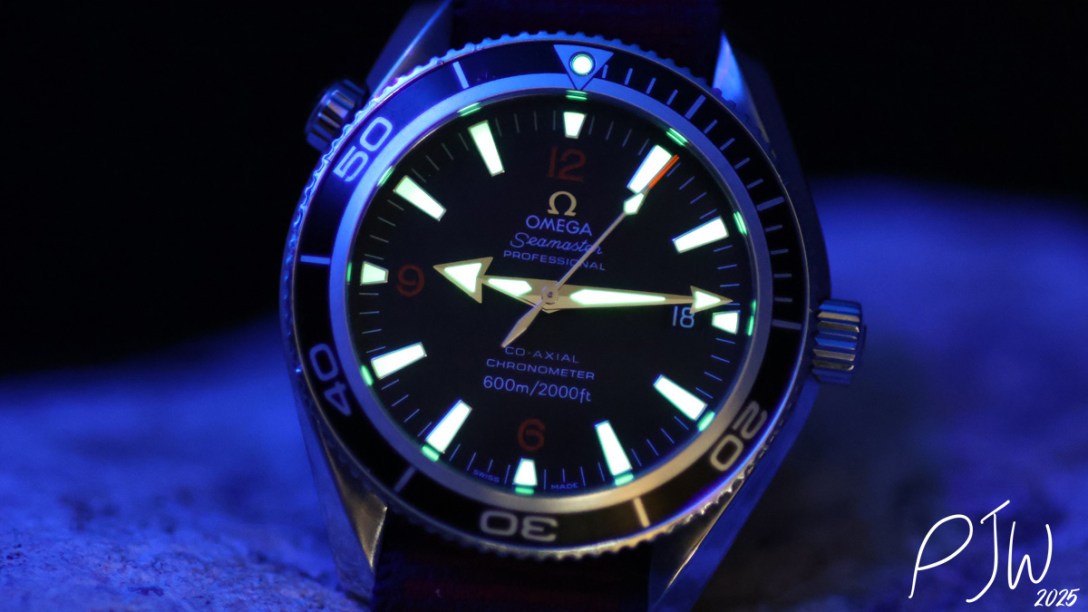
Lume on watches can be a contentious topic. Some folks really value it, while others fall into ambivalence. At the end of the day, lume is entirely a personal preference for watches.
My preference is to have good lume (or a backlight) on my watch. While watches are glorified jewelry, I find the value of being able to tell the time when it’s dark to be pretty important to me. Good lume is something that you know when you see it, but what are the specific qualities behind it?
Lume Qualities
For me, there are three big qualities that I look for with lume.
- Legibility: Can I see the indices and hands well enough to tell the time?
- Brightness: Is it dull, or is it intense?
- Longevity: Does the lume last for a while, or does it peter out fast?
These three qualities are how I gauge how good lume is. I rank them in order of importance (Legibility>Brightness>Longevity).
Before talking about those specific qualities for lume paint itself, let’s talk about backlights.
Backlights
Backlights are battery powered lights on a watch, and are pretty much exclusive to digital watches, ani-digi watches or some analog Timex models. For a backlight, I want it to illuminate the whole dial (if a Timex Indiglo watch), or to illuminate the whole digital display.
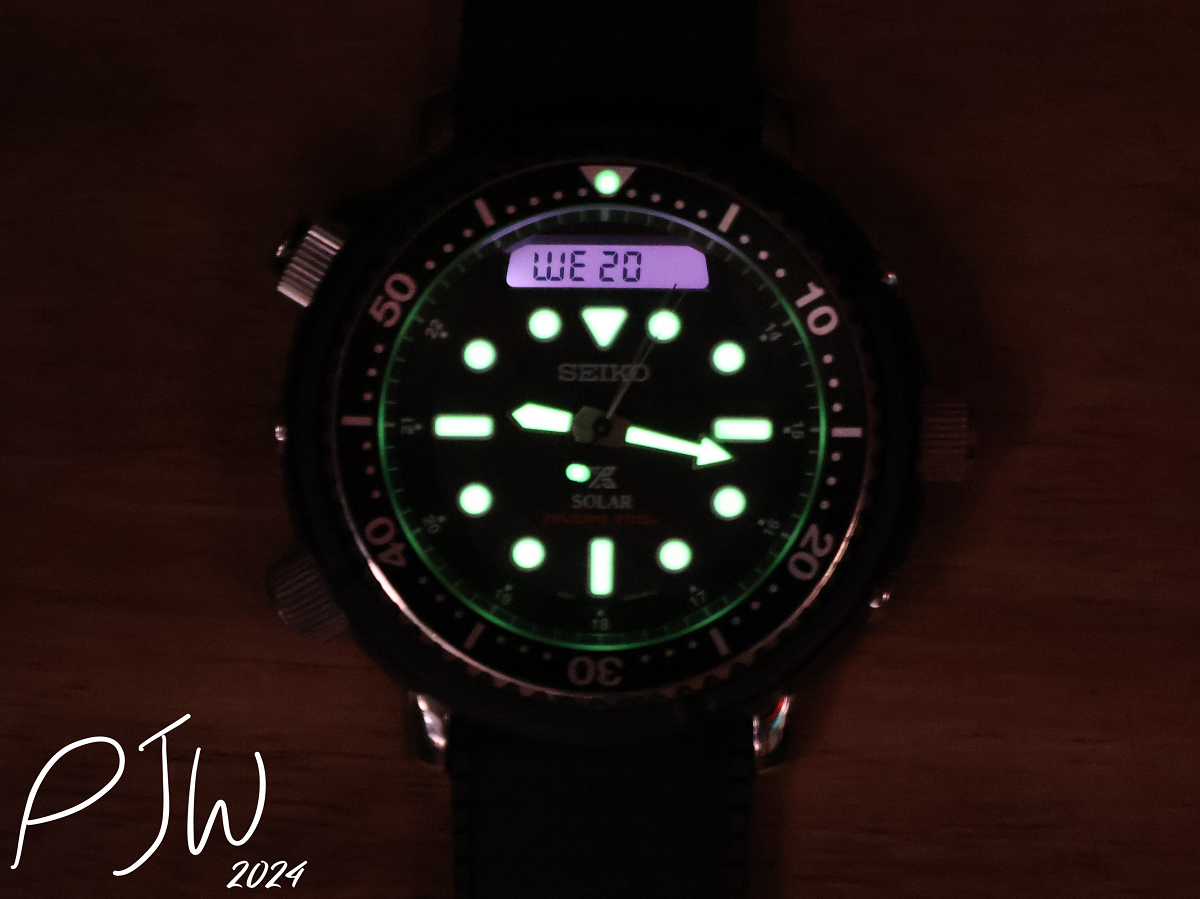
For most models of Casios, they come with good backlights these days (as long as you skip the F91W). The same goes for Timex, with the Indiglo being really quite good. A good backlight is always legible, is plenty bright, and has great longevity, as it’s always there when you need it, and gone when you don’t.
Watches with backlights are my go-to for nighttime use. Whether I’m outside doing stuff, or just want a watch for bed, I a good backlight brings a lot of value to the table. However, I’m still wearing watches without backlights pretty often, and want specific lume qualities to pair with them.
Legibility
Being legible is the most important lume quality, at least to me. It doesn’t matter how bright the lume gets or how long it lasts if it’s hard to read. This is more of matter of design, as the placement of indices, shape of the hands, and color of lume really determine the legibility.
Nearly all of my divers are pretty legible (helpful if you were underwater), but I’m using the vintage Tag Heuer 1500 for this example. It’s got a fully lumed dial, with black indices and black hands, which provide great contrast for telling the time. The lume is all green, where having some different color on the hands (blue or orange) would give more contrast. That said, the hands being black to give a ton of contrast, and make it easy to tell the time at a glance.
To show an example of poor legibility, I’ve got the Casio MW-610. The hands are short and stubby, the indices aren’t lumed, and there really isn’t much contrast. In total darkness, you can barely tell the time, but without a point of refence from the indices, it’s hard to be precise. It’s an inexpensive watch, so the lume and lack of legibility don’t surprise me, but it is a dealkiller for this watch.
Legibility really matters to me, regardless of accounting lume. An illegible watch is one that I don’t like, and that includes when it’s dark too.
Brightness
Brightness of lume is the secondary quality that I look for when looking at lume. I like it to be nice and bright. You can have duller lume that still works well, but I’ve found that bright is better.
A legible watch with bright lume is one that will be easy to read, especially if it gets dark real fast. Bright lume does well when going from light to dark conditions (from outside into a dark room, or from a lit room into dark outside). However, I do think that you can have a watch that is almost too bright.
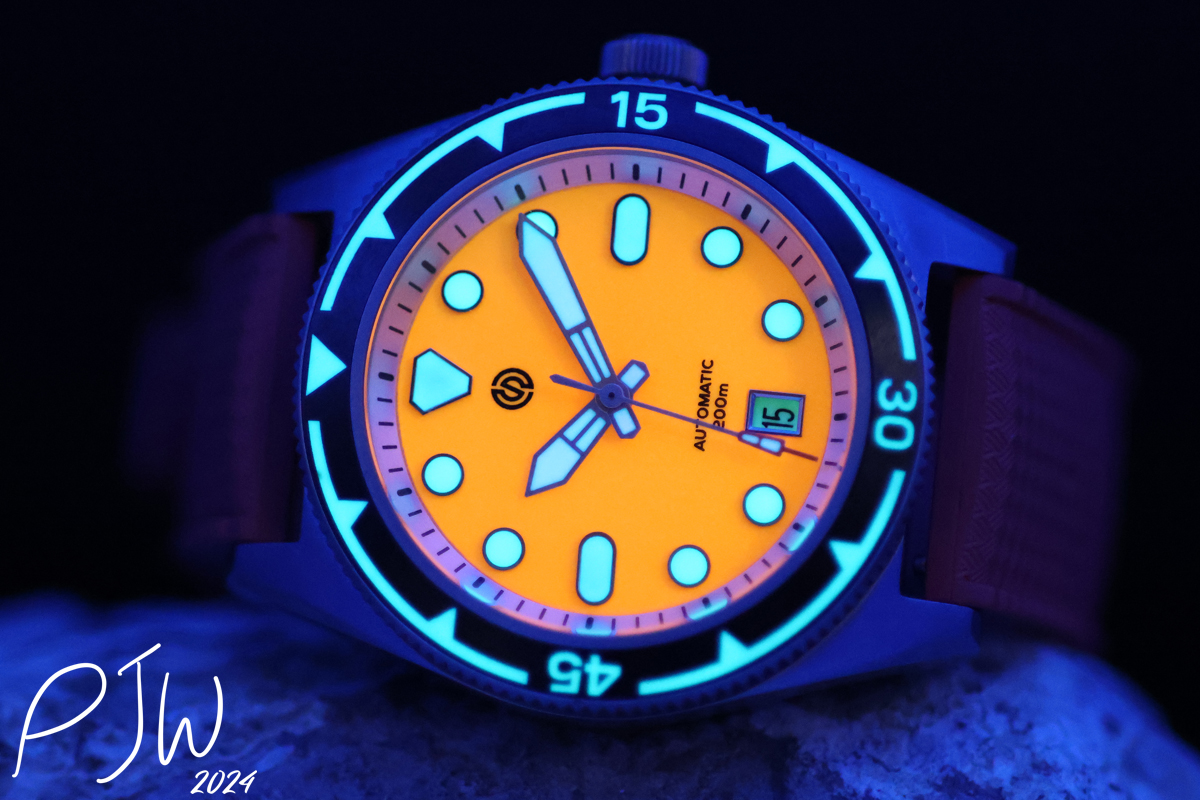
This Signum Cuda was very, very bright. Looks cool, but that brightness could get so bright that it kind of blew out the legibility. After it faded for 3-5 minutes, it tended to be much better than when the lume paint is fully charged.
That said, I think that most companies generally don’t do particularly bright lume. Too bright is certainly the outlier.
Longevity
The final quality is longevity. How long does the lume paint last in a meaningful way?
This (generally) comes down to the amount of lume paint used, and the quality of it. Style of watch will dictate a lot of the longevity, as does the cost too. A dive watch will generally have more lume paint on it than a field watch, and certainly more than a dress watch. The more expensive the watch, the better the lume (generally) is too. Aside from some contenders from Seiko and Citizen, you’ll not be getting an inexpensive watch with lume that lasts very long.
How long does lume need to last? Well, it depends.
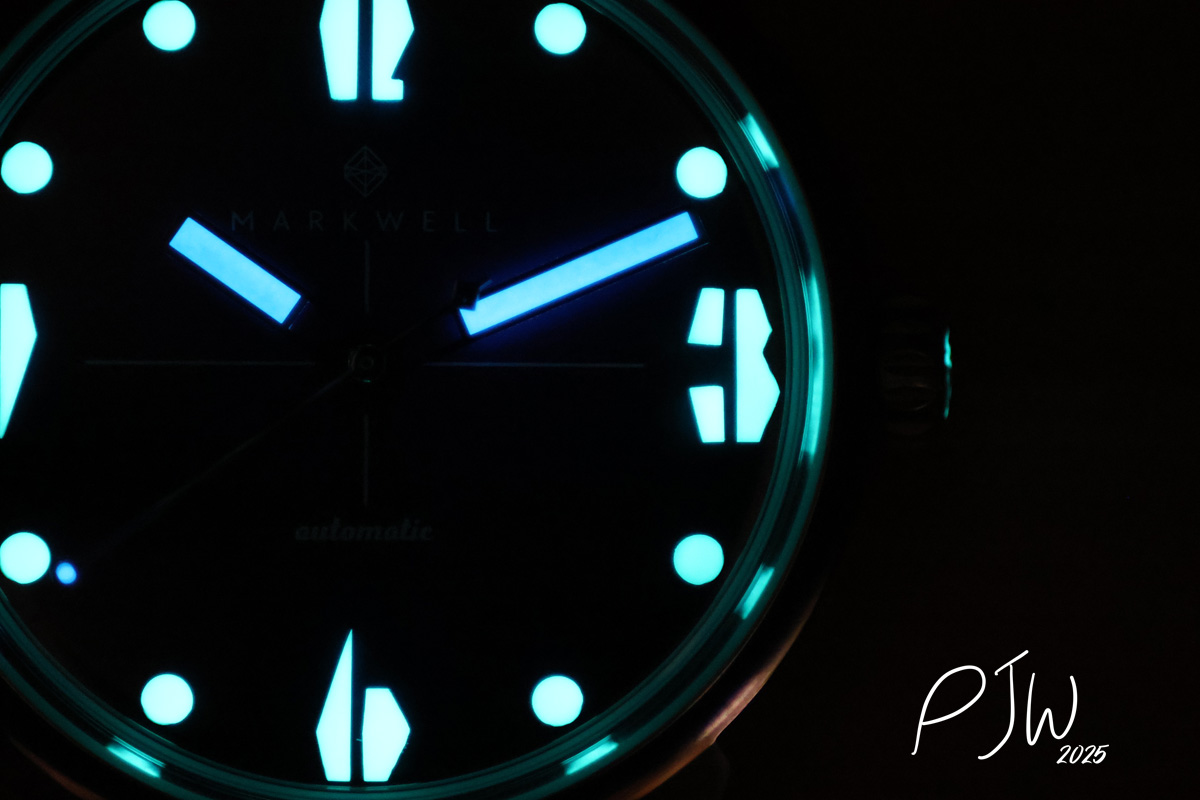
I would consider good longevity to be 1-3 hours. Not just 1-3 hours of faint glowing, but 1-3 hours of good, legible glow time. I personally prefer my lume to be usable for 3-6 hours. That’s a fairly long time, and a lot of watches can’t do it. From my own collection, only my PO and Arnie can really do that. The SMP300 probably could do it when it was new, but that lume was painted 3 decades ago, and the longevity has been impacted by it.
The Verdict
I love lume, and know what I like to see for lume on a watch. I also know plenty of people who don’t care for lume, and want solid metal hands and indices. Where do you fall into the lume discussion?
If you’d like to check out my other works for The Escapement Room, follow this hyperlink. I can also be found at PrimerPeak, YouTube, and WatchCrunch.

 The Escapement Room