

Bulova is a watch company with a storied history. I’m sure Greg has written more about Bulova than I can or should, but I know a fair bit of their history regardless. New York, 150-odd years, Accutron (see: “things that Ryan loves that are guaranteed to hurt him,”) giant space chronograph, et cetera.
Bulova wasn’t a prominent name in South Africa, at least not when compared to North America. I see the odd Bulova floating around, many are the gaudy modern ones, with some vintage examples cropping up every now and again. These are usually the basic automatics that have “23 Jewels” printed so large on the dial everyone from Stellenbosch to Sichuan knows how many jewels are inside your watch. They’re good watches, but my tastes have shifted beyond them. It’s pointless I collect twenty basic three handers with white dials. If you’re a beginner vintage watch collector, those old Bulovas are really worth a look, but if you’ve been doing the vintage watch thing for a while, it’s very likely that you own something like it already.
I own three Bulovas. One is the 1943 Clipper Greg gifted me (I still love it to bits) another is a 1977 Solid State Quartz LCD watch I bought in May and the last one is my recently acquired 1976 LED watch. I was hesitant buying the SSQ, knowing that LCD watches can fail for the smallest of reasons and can be impossible to repair without replacing parts if say, the display goes out. The best case scenario requires a soldering iron, a multimeter and knowledge on whatever little chips are inside the movement. Repair is sometimes possible, but few ever try because of how different it is compared to normal watchmaking. All the same applies to the LED watch, although I wasn’t too hesitant, seeing as I got it for a good price from my watchmaker.
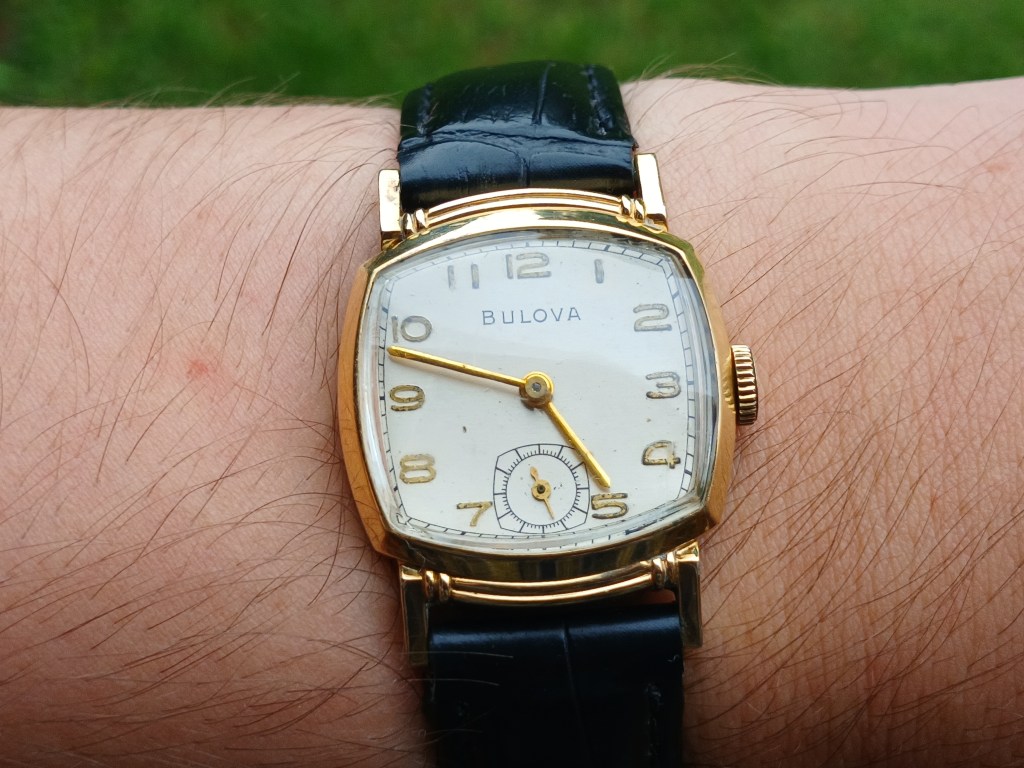
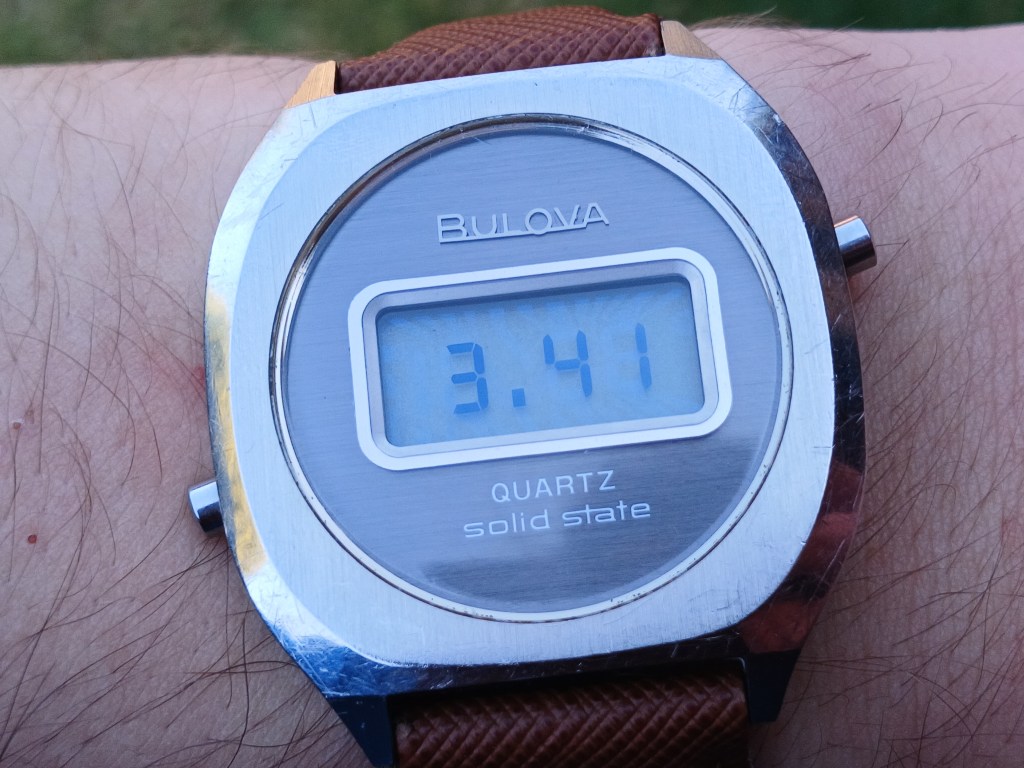
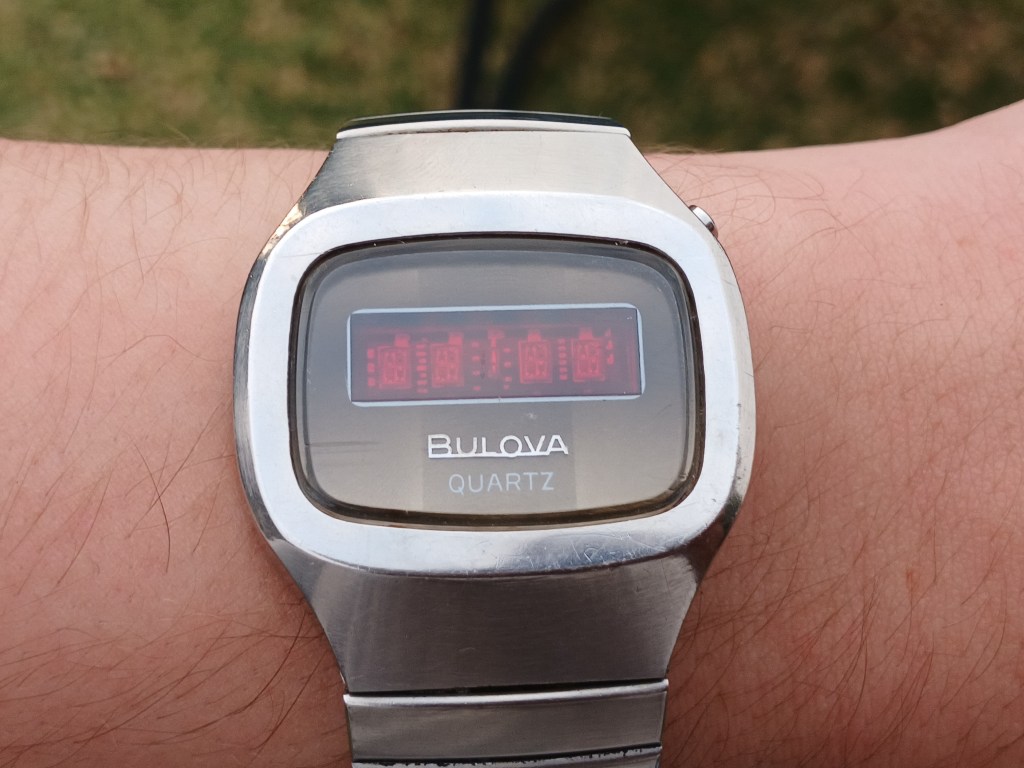
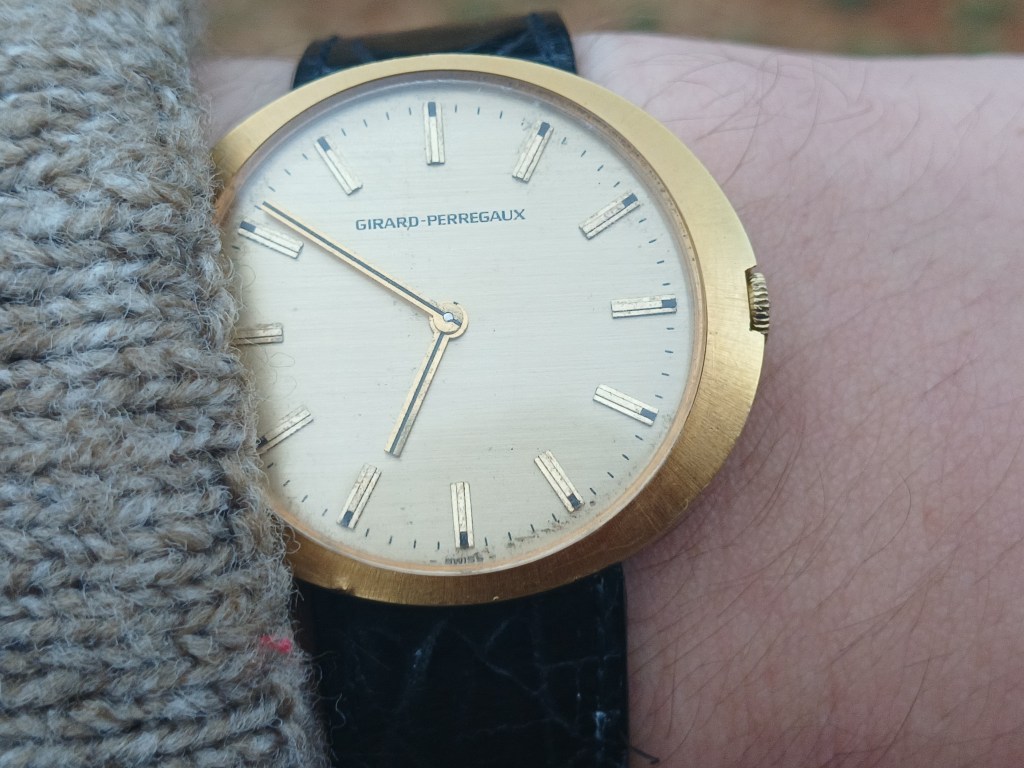
I was never really a “snob” regarding whether a watch had a mechanical, quartz or other type of movement. Much like my preferences in cars, books, Doritos flavours and women, I like what I like, sometimes not knowing why, but accepting it as fact regardless. I care more about the quality and serviceability of a movement than whether it’s source of energy is chemical/electrical or mechanical. Sometimes, normal people don’t really get it when I tell them I repair vintage watches while wearing what looks to be a basic LCD watch. Maybe that’s akin to the wealthiest of mechanics driving Toyotas and Hondas despite easily being able to afford a BMW or Audi. Sometimes I don’t get it when I open my watch box, which contains a Universal Genève Altesse, a Girard Perregaux flying saucer, one of the rarest vintage Nivadas and my Camy Club-Star, among others, and choose the LCD watch with Hong Kong stamped on the back.
That’s where the Bulova SSQ shines: it truly is a watch reserved for “those who know.” To most, it looks like a cheap LCD watch. To me, it’s far more than that, because I did the maths, and, accounting for inflation, it would be an almost 700 USD watch today. My Omega Seamaster quartz (which I recently traded for the aforementioned Girard Perregaux and a 1969 Seiko fashion watch) from the same era sold at roughly the same price, maybe a bit less. LCD watches were once upon a time luxuries. LED watches were much the same, think the Pulsar P1 and it’s descendents. Bulova was a little late to the LCD game, so by the time my SSQ was made, LCD technology had become more accessible, but still a long shot from what it is today.

That’s what I love most about the SSQ. It’s a monument to a bygone era. They really don’t make them like they used to. Premium LCD watches don’t really exist anymore. The Tissot PRX digital is the closest thing to that, but no one buys them. The typical watch fan with 300-ish USD to spend is very likely not looking for a digital watch, especially seeing as the PRX quartz and automatic attracts many beginner enthusiasts, i.e. people less inclined to spend big money on an LCD watch. The Breitling Aerospace is another good mention, but it’s analogue-digital and positioned as a pure-blooded luxury watch. There’s the Bulova Computron, but that’s LED and more a nostalgic reissue than a premium modern watch. Autodromo makes some premium LCD stuff, but it’s way overpriced. One excellent watch that meets my criteria is the Hamilton Pulsomatic, powered by an automatic movement that sold so poorly only people like me care for it. I don’t blame the watch companies for not making more premium LCD watches, because, as the Tissot PRX digital has shown, few people go further than trying it on or watching a YouTube personality review it.
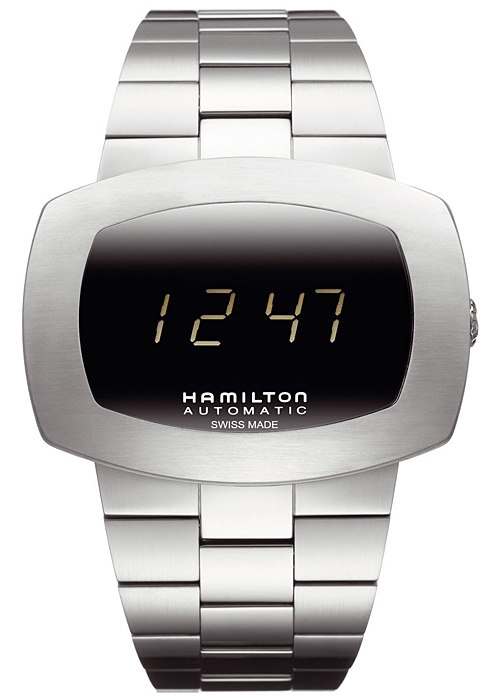
Is this a future classic or a watch destined to be forgotten?
My Bulova SSQ was about 30 USD used. For the case and dial (I guess you could call it a dial) quality, that’s a bargain. Vintage LCD watches, with exception to some Omegas, Heuers, et cetera, stay cheap because demand stays low, and demand stays low because they don’t look luxurious and no one wants to be around when they break.
I like the retro look and low maintenace. Sometimes I don’t feel like winding and setting a watch, and I’m not ashamed to admit that. The backlight used to be quite okay until it stopped working and the module is basic without making me wish for more. I get the hours and minutes, the month and day with a push of the button and then the current minute and running seconds with another push. That’s all I really need. A chronograph would be nice, but so would be cuddling with Boity Thulo. I can’t have everything I want all the time and I won’t lose sleep over that fact.
We’ve established that I’m quite a fan of my Bulova SSQ. I’m very tempted to get another, but they’re a rarity here. As cool as they are, they aren’t “eBay shipping and customs duties” cool.
Another American brand that I’ve been more interested in lately is Timex. A vintage Timex is cheap. That’s it. No matter how you frame it, they were pin-pallet machines designed to let the everyman know the time. They feature some crazy designs and some basic designs. Any colour, any shape; they made so many, there will be one for you. I’ve been itching to get an electronic dive-style Timex or a flying saucer case that oozes ’70s charm, but they aren’t too common in South Africa. A Timex is not worth import duties, neither is it worth the sometimes ridiculous prices local sellers ask for them in non-working order.
Like LED and LCD watches, I’d refrain from buying non-runner Timexes. The whole technically unserviceable movement and lighter fluid mixed with hopes and dreams story doesn’t make me reach for my wallet, even for a nice one. Maybe I will get one for the hell of it, but I don’t know when that day will come.
In the meantime, I’m trying to move my collection upmarket; I’ve sold my Lucerne Digital Jump Hour to a University staff member, I’ve listed my Eterna Matic 1000, my Tissot Stylist, my Ernest Borel Chamber of Mines Safety watch, my blue Osco and my Camy Challenger I bought NOS two years ago for sale. My ego means I’m not selling them at a loss. At worst I want to break even, not including expenses like straps.
I have bought a bunch of watches these last two months or so. I bought a Camy Superautomatic, a Johannesburg Electricity Department service watch, a Seiko A158 LCD watch that unfortunately eats batteries, and the aforementioned GP and Seiko I got from a trade deal. I am also the proud owner of not one, but two Seiko 6139B automatic chronographs. Neither of them are perfect. One is a 6139-6002 with a teal dial and black and red bezel. I’m sure the bezel insert may have been swopped out at some point, seeing as the teal/blue dial should come with a blue and red bezel insert. It’s running, but it needs a new stem and crown. The other is a 6139-7080 “hexagon” integrated bracelet model with a missing bracelet. I don’t know if I’ll be able to get it running as it likely needs the sort of love I don’t always have time for. For the first time in my life I may make use of another watchmaker to fix my watches, which in some senses feels like asking someone to pretty please have intercourse with my girlfriend. It’s a strange feeling, but I really don’t have time to troubleshoot a chronograph.

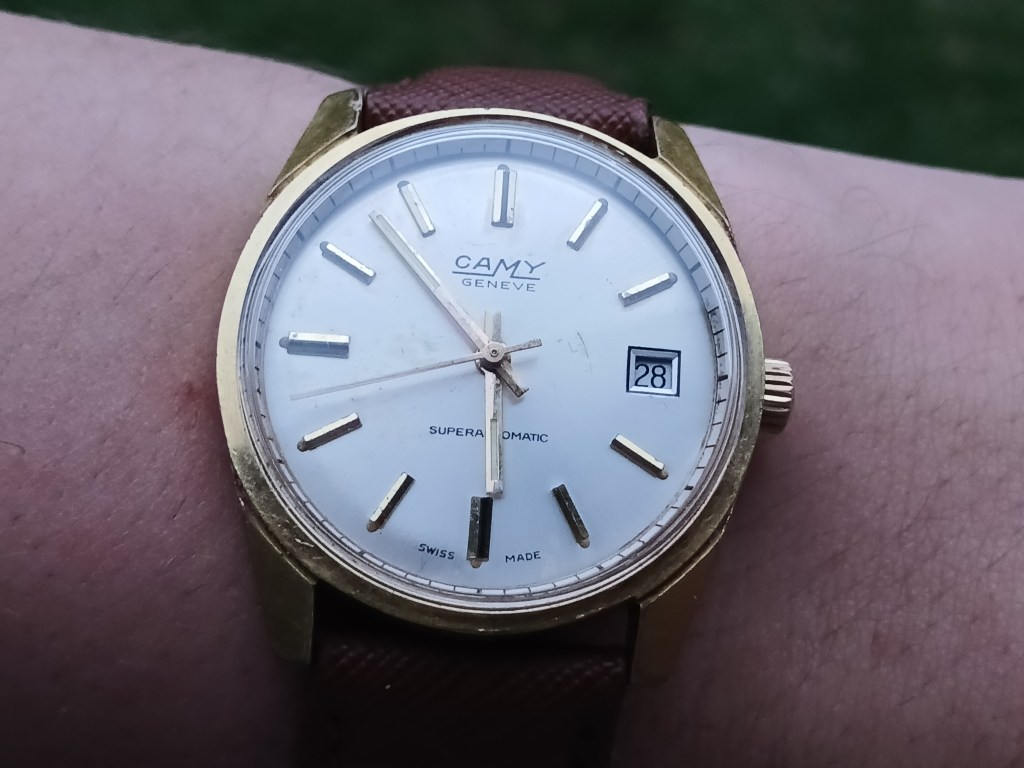
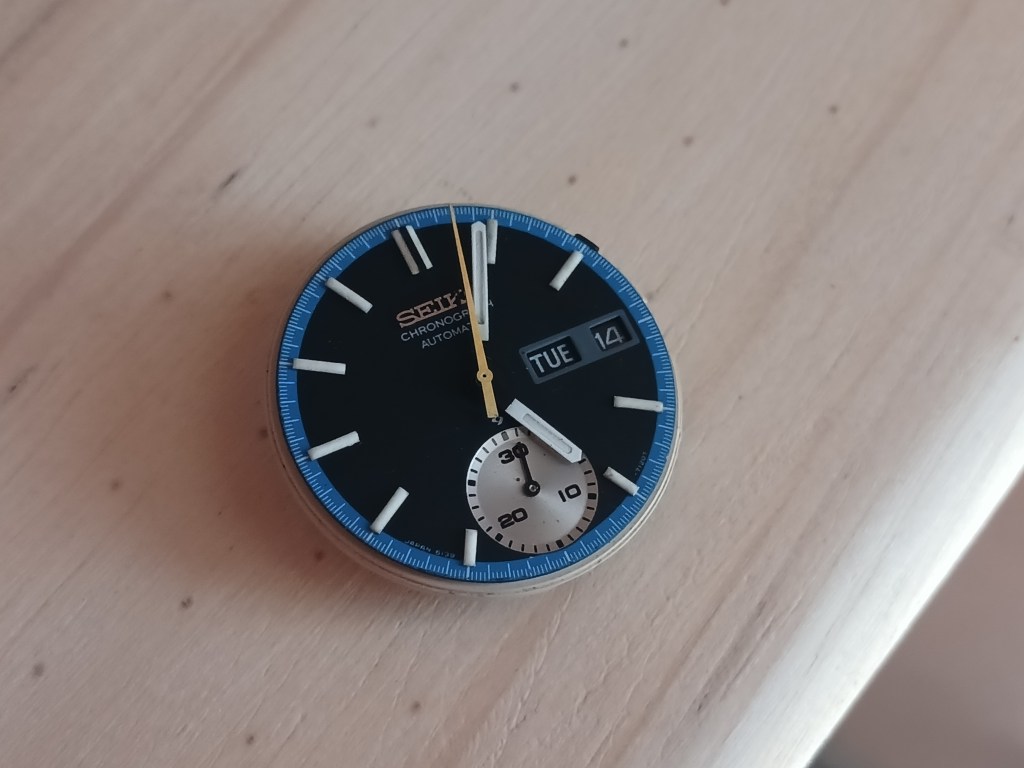
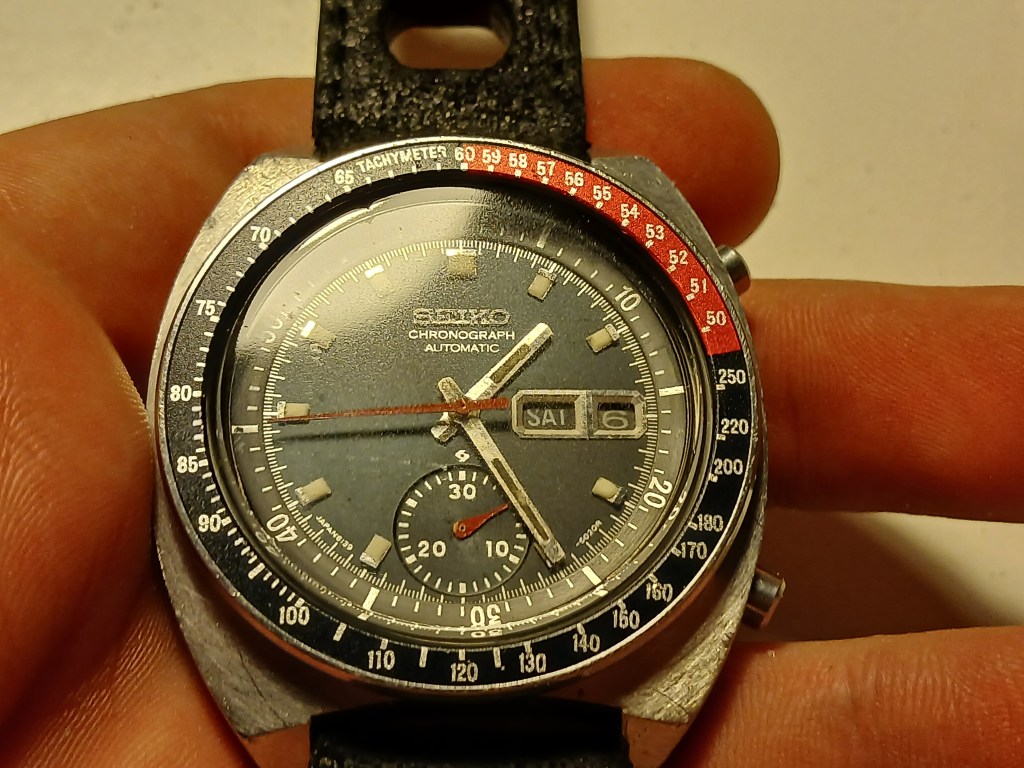
Just before I published this, I made another purchase: a watch lot consisting of a Lanco, Kienzle Alfa, Ruhla, two Roamers, an Osco and… a Seiko SQ 150m Diver. Let’s hope it works.
That wraps up my brief collection update and strange Americana obsession, despite buying heaps of Japanese watches. One day I’ll go on holiday there and experience every American stereotype. For a week or so, I can chow down on some oily food, make conversation with strangers and hopefully win over some ladies with my exotic accent. Till later, dear reader, I have tests to study for and watches to sell.

 The Escapement Room