

This ongoing investigation was born out of my procrastination. It’s exam season and it’s one of those seasons that comes with fists and arms. Naturally, my mind saw this as an opportunity to catch up on all sorts of things, chief among which was the origin of my Nivada Grenchen Antarctic Spider.
Now one may say, “Ryan, you pillock, it says it on the dial, Grenchen, what, do you need someone to spell it out for you?” It’s deeper than that. The biggest question plaguing me once the watch had worked its way into my heart was “how the Hell (a frustrated me used a very different word) did a watch designed for use in the sub-zero wasteland called Antarctica end up in the goon-head capital of the world?”
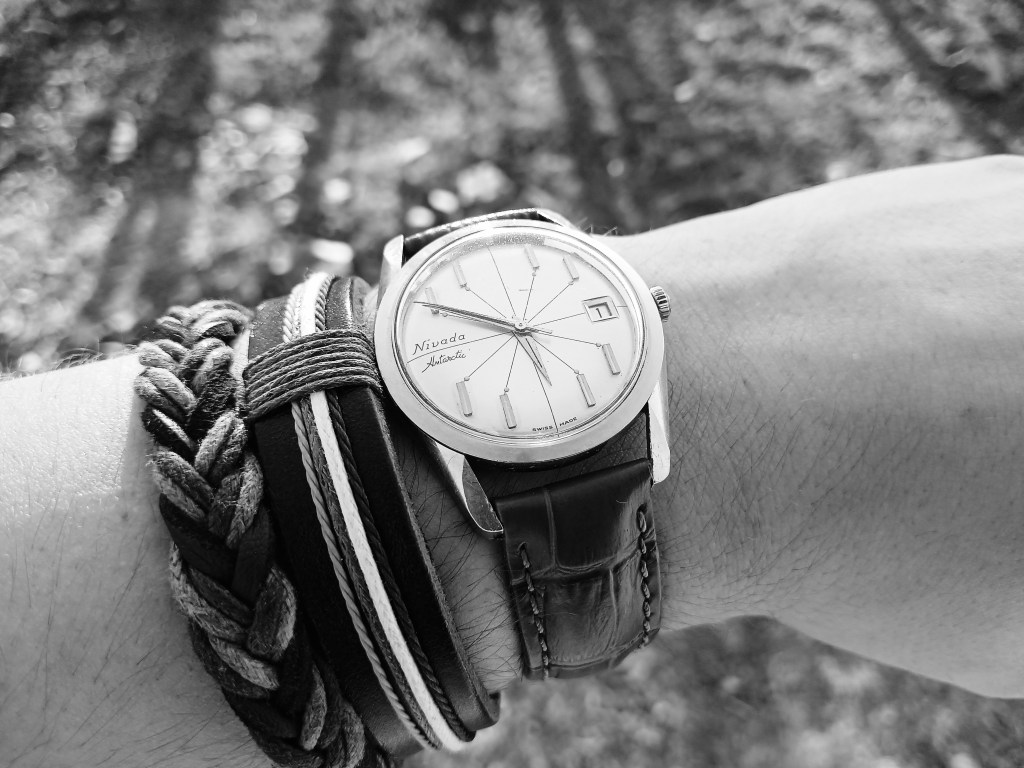
My town is agriculture- and mining-based. In other words, people here don’t often have money for luxuries and even when they do, they don’t typically spend it on things like watches. The most expensive watch one would find here is an 18k gold Omega Seamaster quartz, because the mines gave them out as long service awards. There was a pawn shop owner who had a solid gold Rolex Datejust, if I remember correctly, but that wasn’t a purchase made in Fochville or made with money made in Fochville, because I am sure he had other businesses. Another exception was a group of very well-off drug addicts who used to live in my street before I knew how to use the lavatory, who sold some luxury watches (and a V10 BMW M5 or two) at bargain prices to get their next hit. A Nivada wasn’t an incredibly expensive watch back in the day, (despite what ever-increasing prices seem to say) but it is a step above what one would normally find here. This town embraced the quartz crisis/revolution very quickly and people wore cheaper and cheaper watches. The old stuff either got thrown out, taken with those who emigrated, given away or pawned. By the time I was born, I’m sure most of the good watches had left the shelves of the pawn shop and watchmaker’s shop already.
Mining destroys a watch. Have you ever heard of acid mine drainage? It’s the reason that I have an irrational fear of deep water at the bottom of uncovered pits, although mine robbers (Zama-Zamas, as we call them) will have likely put a 7,62 × 39mm round between my eyes before I even have a chance to plummet to my long and painful death. That was the end of my magnet fishing endeavours for old service watches before I even had a chance to drive to the old shafts. Many watches have suffered horrible damage from water or dust. Service watches come in two flavours: worn after retirement and worn underground. My grandfather’s watch is of the former, but many Longines, Omegas and Zeniths have suffered abuse unheard of by us watch lovers. Think of rusted-out movements and destroyed dials.
So for me to find a Nivada (a tool watch) that hadn’t been used underground or otherwise molested at a pawn shop for next to nothing seems odd. It seems so odd that some secretive organisation might have even placed it there as bait for me. They could have filled the watch with VX nerve agent to assassinate me once the caseback came off. It would have certainly worked too.
I could simply take this as the bargain of my lifetime and live happily ever after, but unfortunately, I’m just not like that. See, I need to analyse and pick apart anything and everything, from who bought this watch, to why they bought it. Obviously, I’ll never know who, because the folks at the pawn shop have likely forgotten. I’ll never know why the watch was bought beyond maybe the owner wanting to check the time. That leaves me with “when” and “where.”
I only really started investigating this when I saw a Nivada box and blank warranty card for sale on eBay. The seller had conveniently taken a photo of every page in the warranty booklet, which had the names and addresses of each country’s dealer. Surprisingly, there were a lot of countries in Africa. In that book I found the name of the shop that likely sold the original owner of my Nivada his watch: H. Canard & Co. (Pty.) Ltd.
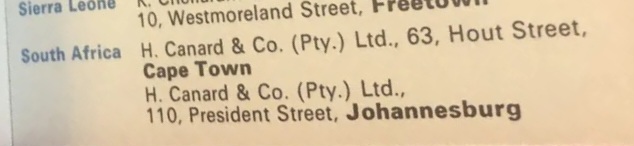
Cue the montage music, because I’ve been investigating for what seems like aeons. There are two addresses listed, one for the Johannesburg branch and one for Cape Town. Johannesburg is the likeliest of the two, based solely on proximity. So let’s take a digital (do you think I have the time and money for a real trip in this day and age?) to 110 President Street. Except 110 President Street doesn’t exist anymore. It’s now 110 Helen Joseph Street. The numbering can’t have changed. The modern government has changed many street and city names, but I cannot recall street numbers ever changing. More evidence of this is the shop on 110 Helen Joseph Street displaying an old sign from before the name was changed, which was in 2015, I believe.
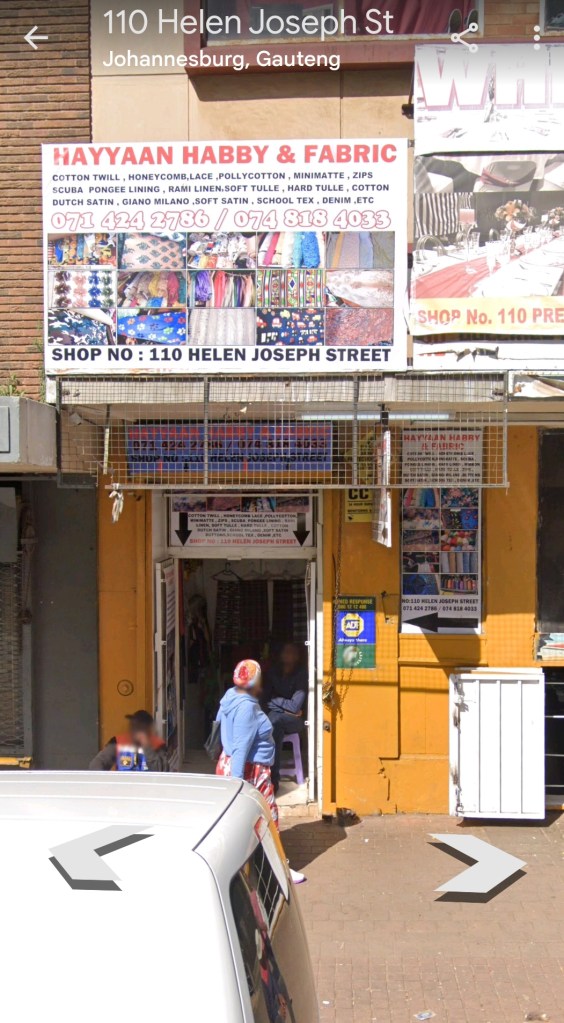
Marvel in the glory of a brick-and-mortar watch shop… er… hang on, that isn’t H. Canard & Co.! Now you don’t need me to tell you that Johannesburg is unsafe. Seeing a young man with a white collared shirt waltz into a small fabrics shop is basically begging on your knees for a mugging. I doubt any information on H. Canard & Co. still exists in this shop, so I’ll be staying at home for now.
There’s still Cape Town. The Cape is a lot better when it comes to following paper trails than Johannesburg. Records are kept well and businesses usually survive for longer. Off to 63 Hout Street we go then.

That’s not a watch shop… that’s a bar… with a poster in the window advertising a striptease. The street numbering on Google Earth is a little bit wacky down Hout Street, so we could be looking at anything from 57 to 67 Hout Street. Looking up some nearby shops helped out, but number 63 seems to be obscured. There are three storeys to the buildings down this road, so a law firm, travel agency and the piscatorial society occupy the same address that H. Canard & Co. once did. I could maybe try my luck with an email to each of them asking for information about the building, but I will first find out if I can’t make it to Cape Town myself. It may be easier to get something if I show up in person and I also have a few other loose end that need to be tied off down in the winelands.
Here’s the rest of what I know about H. Canard & Co. The company probably closed doors in 2005 judging by the government gazette.


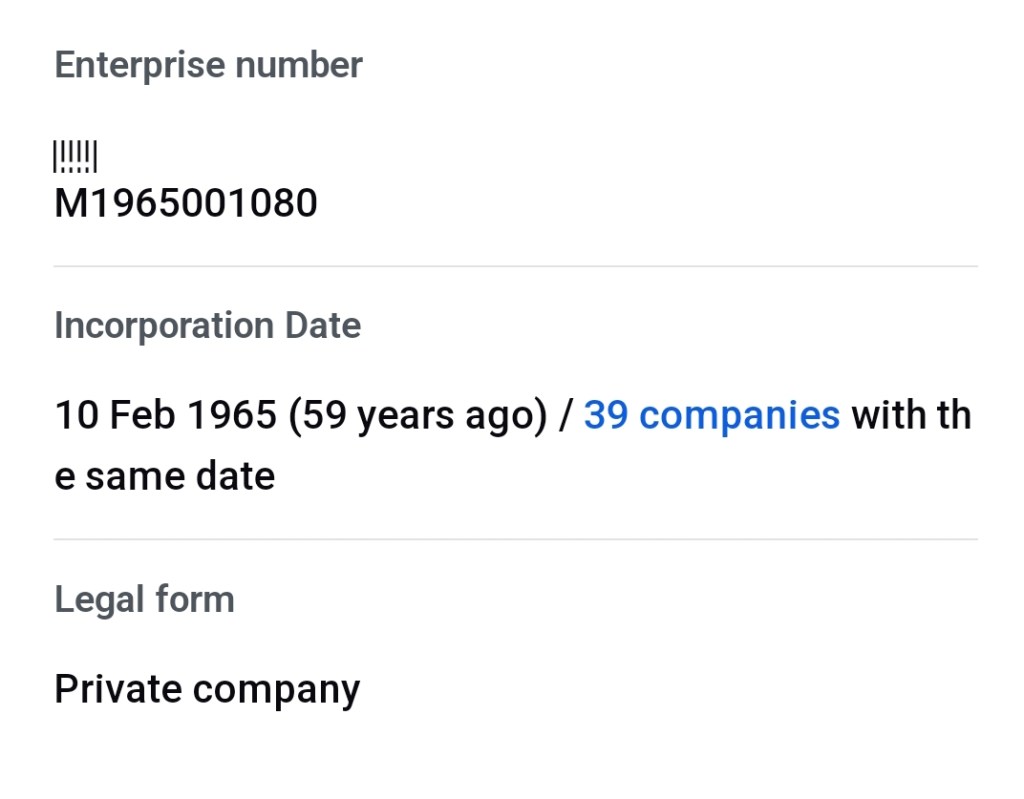
I have read through a legal document about a lawsuit between Hermann and Canard and the Policansky brothers, but that had to do with tobacco-selling and the trademark of the name “Sultan.” The date of this is also a few decades too early to be of much use. One database suggests that H. Canard & Co. was registered in 1965, but this may be wrong as the site also claims that they are not in the process of liquidation. (They’re not technically wrong, seeing as they have been out of business for a while now.)
So that’s the end for now. I hope that I can update this eventually, although I doubt anything will come of it.

 The Escapement Room
That’s some fine internet sleuthing. I assume you already looked into the legal address of 2ND FLOOR, FHS HOUSE, 15 GIRTON ROAD, PARKTOWN, 2193.
LikeLiked by 1 person
Thank you. I haven’t looked into that address and a quick Google search gives me all sorts of businesses from Transnet to a diamond cutting works. Could you tell me a little more about it?
LikeLike
When I googled the later enterprise number M1989005752, that came up as the legal address.
https://b2bhint.com/en/company/za/h-canard-and-co–M1989005752
LikeLiked by 1 person
Thank you! I’ll try and maybe get in touch with a former employee or something.
LikeLike
During the mid-sixties, H Canard & Company in Hout Street, Cape Town, were a Manufacturer’s Representative of several different companies in the U.K [e.g. Stratton and Midwinter] and companies elsewhere. I recall they also carried a sample range of Nivada watches at that time if this is of assistance to you.
LikeLike