

There is something that I don’t understand about the online vintage watch market. I have theories, but just really guesses about this particular problem. If you have been paying attention to this space you know that Chris and I pride ourselves on being able to find diamonds in the rough, underappreciated watches that don’t have a storied history and thus get ignored. Make no mistake, these are good watches. I found an old Ellis with a Felsa 415 automatic movement that was plenty accurate (time had sapped the power reserve). This led both of us to seek these early automatics. Chris has written about his Fluva, a watch with more text on the dial than a Rolex. I found an unloved Altus, sister brand to Glycine, that cleaned up nicely and contained a Felsa 690.

Prices in the vintage watch world are up a bit in the past few years. You will not find a seller who doesn’t know a Universal Geneve Polerouter or Glycine Vacuum like you could have a decade ago. Even brands that are not loved by the enthusiast community, like Movado or Invicta bring a premium vintage price due to name recognition. I think that the buoyancy of prices is due to the availability of information on the internet. If you can search “Zodiac Autographic” you can find information and comparable watches and their relative prices. Information is key.
It is where there is an uneven distribution of information that conditions are fostered that favor the buyer, usually. That Altus is a good example of this. To the seller, it was an old no name watch with a cracked crystal. To me, it was a drawer denizen that contained a wonderful movement. It cost less than two tickets to a movie theater. That is because I knew more than the seller. I also knew what a new crystal would cost me (less another two adult tickets). My watchmaker had it humming in no time and for very little money.
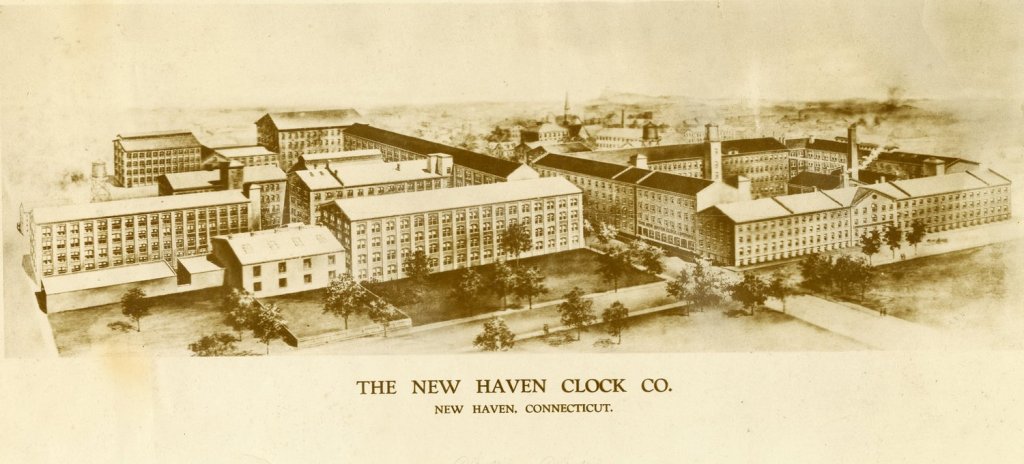
Ok, that is the set-up, but what is this uneven distribution of information plaguing me? It is the market for “dollar watches.” There was a time in the middle to late nineteenth century where the American watch industry was the envy of the world. The best pocket watches were American, and this continued until about the First World War. The Swiss sent industrial spies to learn Waltham’s secrets. But for every Waltham, Elgin, Illinois, Hamilton, Howard, or Hampden, there was the budget maker who served the working man. These watches used Georges Fredric Roskopf’s pin pallet escapement (patented in the U.S. in 1868). Roskopf was a social reformer (in a narrow sense) trying to bring time keeping to the working man. These watches bore the names of New Haven, Ingersoll, Westclox, and Waterbury.
I have an American watch heavy collection. I have owned Jaro, Rensie, Gothic, Milber, Helbros, Welsbro, and Clinton in addition to Elgin, Waltham, Gruen, Bulova, Benrus, and Hamilton. But these are all fully jeweled watches. Most of them relied on Swiss ebauches. I have not ventured into the pin pallet vintage world. (Ok, except for the Jaro, and they are gone now.) I have avoided vintage pin pallet Timex (formerly Waterbury), the best pin pallet movements ever made. If you read Chris’ vintage guide the reasons for avoiding pin pallet watches are plain: these were disposable watches, the finishing is rough (even by the standards of the day), and the internal parts are usually worn and very difficult to replace. The jewels (synthetic rubies) really save wear in lever escapement watches. They are better, more durable and more accurate. And, most importantly, your watchmaker will not work on them. (Send them to Ryan, he will work on them.)
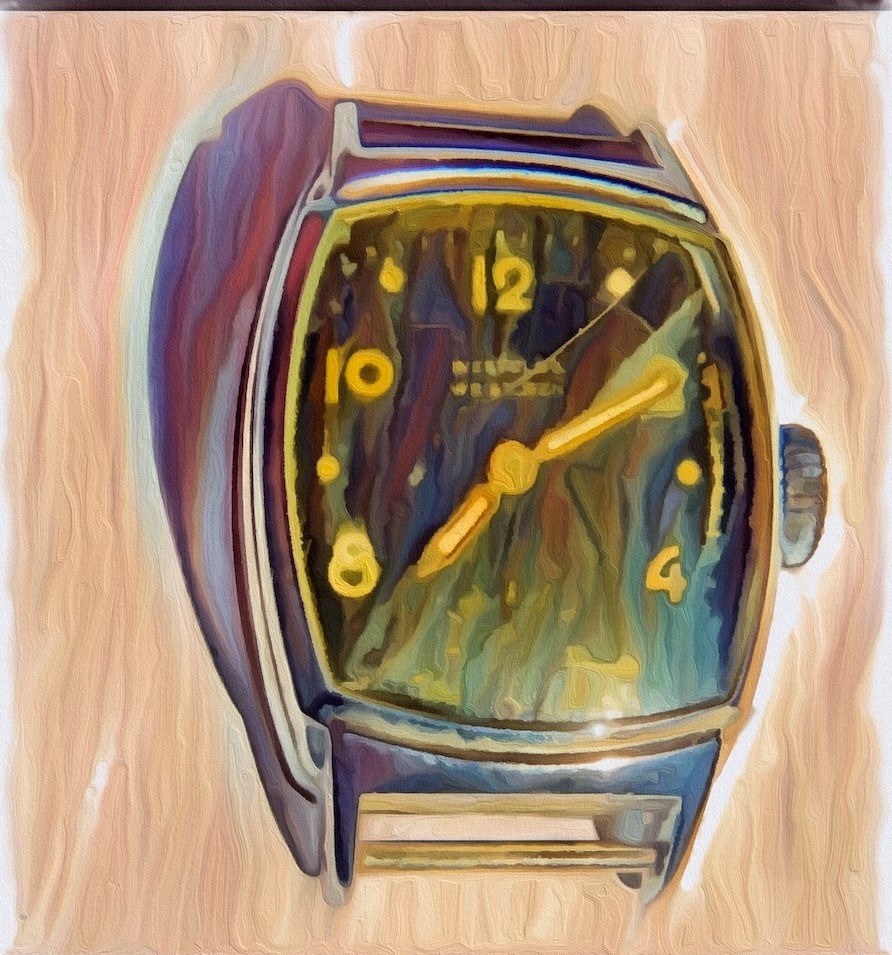
For the past few months, I have been trying to secure a dollar watch for my collection. I have a dollar pocket watch, a Westclox “Pocket Ben”. It was a gift and needs a little work. I can get a day of reasonably accurate time out it. I am looking for either a Westclox “Wrist Ben” or a New Haven model. These were the watches of the Great Depression. They are truly Art Deco. A poorly made watch that is unlikely to work, or work for long, with a printed dial, made of base metal, with a pin pallet escapement should cost less than a fully jeweled automatic watch like the aforementioned Altus, surely? No. Not by a mile.
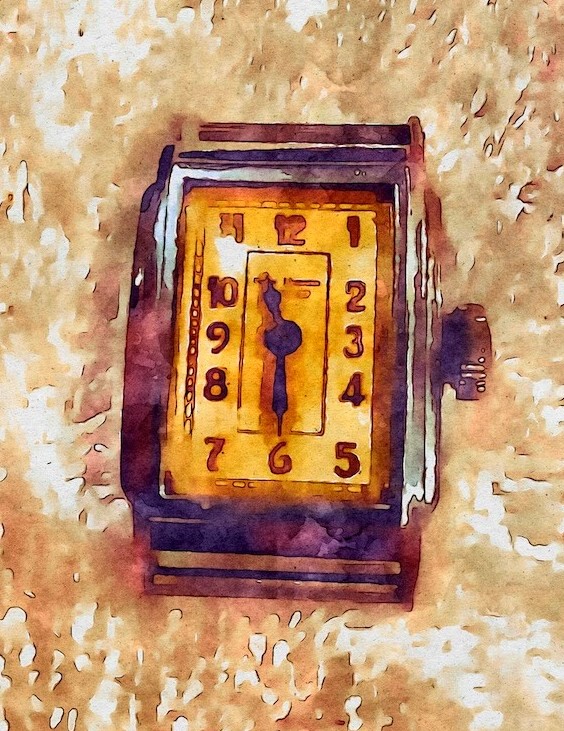
My goal when I am on a vintage watch hunt is to find the best watch for the least amount of money. I let many good watches go by when bidding gets hot. This will be my 50th or 55th vintage watch, there is no reason to overspend. For dollar watches I have set a fast limit of twenty dollars. I have bought very nice watches for less (and more). Also, the watch must work. “Work” is a broad category ranging from “accurate timekeeping” to “the hands move when you wind it”. It makes little sense to buy a brick (ok, sometimes it does, a topic for another day).
You would think that to the extent that these watches still exist, given their disposable nature, and their poor construction and lack of precious metals, that these watches would bring less than their levered escapement counterparts. I wish. 99% of these dollar watches that I have found are non-working. This means that you might have to buy several to get the parts necessary for one functioning watch. But the biggest insult is the price which ranges from around $25.00 to $150.00 for a watch that doesn’t work and that your watchmaker will refuse to fix. What gives?
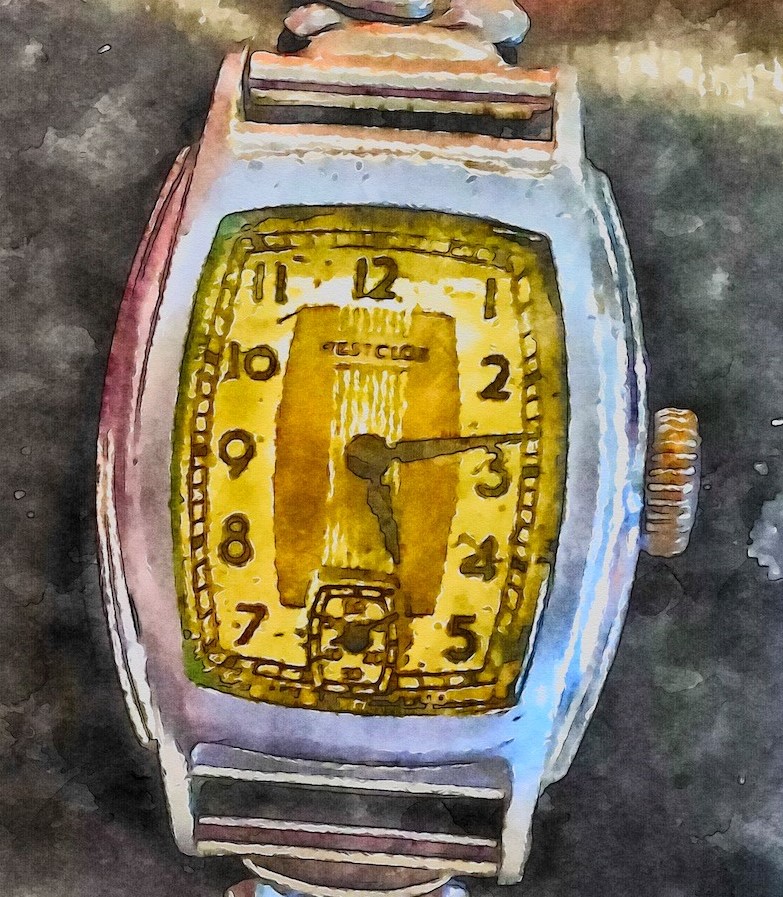
Back to the beginning, this may be an uneven distribution of information. I know that these watches are terrible. But does the seller? They look old in ways that many watches from the 1950’s don’t. They are exotic artifacts from the deep past. Some, especially the Wrist Bens come from the 1950’s, but they look older, much older. Older is more expensive. Maybe they are just “overwound” or even better “need a new battery”. These are formally disposable watches that probably have a broken balance staff or mainspring. There will not be a quick fix. Most of these are “ex-watches” in that they will never tell time again. I just want one for under $20 that I can throw a cheap strap onto for the occasional proletariat cosplay. I can’t find one at a price that I will pay. But I will not overpay.
Someday if I land one, I will tell you the story of the particular company. New Haven was an interesting company. Before the Civil War they were the largest supplier of clocks in the world. So are Ingersoll and Timex. These companies are intertwined or were. Ingersoll brought pin pallet watches to Europe, before the likes of Medana and Endura. Until then I will still be on the hunt for a dollar watch of the Great Depression.
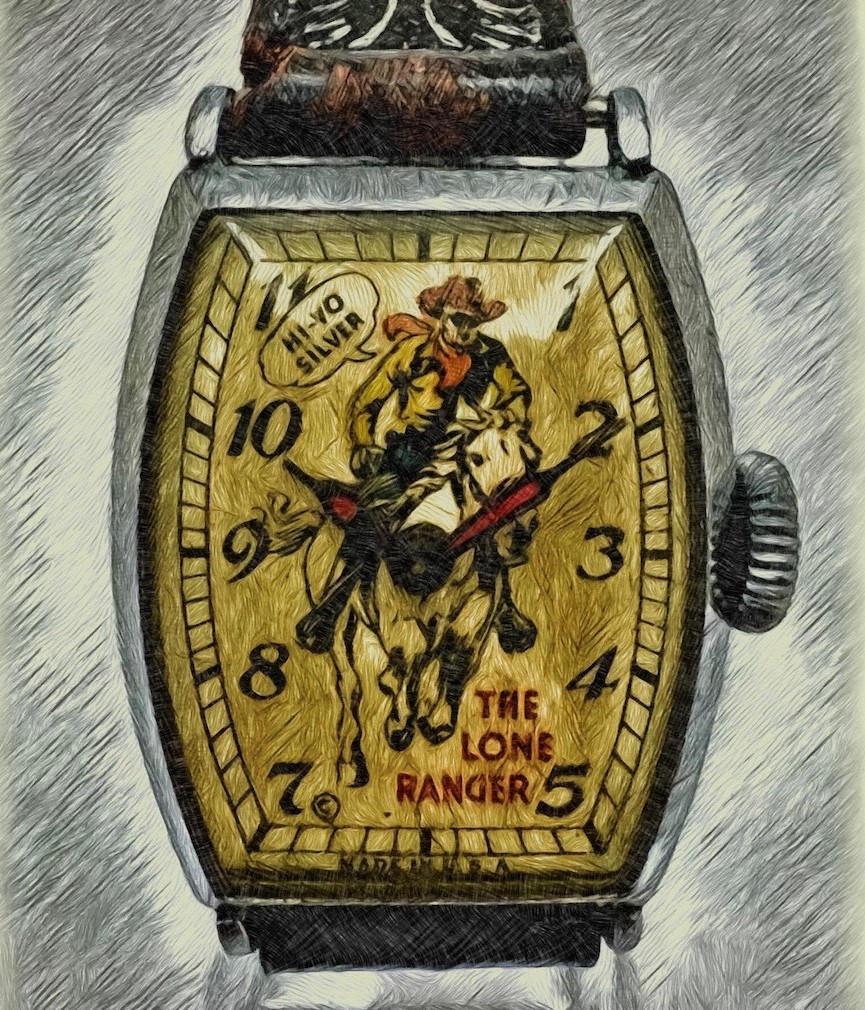
(This discussion about vintage prices does not include the novelty watches each produced. New Haven has Dick Tracy and Little Orphan Annie watches. Ingersoll had Mickey Mouse and Ingraham had Roy Rogers. James Dean wore a black Wrist Ben in “Rebel Without a Cause”. This is a different sort of market.)

 The Escapement Room
You read my mind with this post, Greg. This is the one thing that irks me to the point that my eyeballs want to explode. Take my Lucerne Jump Hour as an example. I paid the equivalent of 20-ish USD for it about a year and a half ago. That’s about all these jump hour watches are worth. They weren’t exactly dollar watches, but used similar movements, with the BFG 582 and 866 being favourites. There was a digital movement that was fully jewelled and automatic that appeared in the brands one would expect, Vulcain, Camy, etc., which I understandably believe should be priced higher than their pin-pallet cousins.
On eBay, I see digitals like mine being priced deep in the 200 – 300 USD range, which is bald-faced robbery. Maybe it’s a style thing, where non-watch enthusiasts go through their attic and find their uncle’s funky ’70s watch. Uncle was a bricklayer, that watch isn’t a 300 USD watch, but saying that is like yelling at clouds. Sellers won’t be convinced.
I like my Lucerne, although I hardly wear it. I wouldn’t mind another for 20 USD, but for 300 USD… I’d rather eat three hundred silver dollars.
Pin-pallets are the abusive goth girls of watch collecting. Most people have their reasons for not wanting them, all of which are valid, but I’m a masochist with an obsession. I’m not a pin-pallet collector, but I enjoy working on them sometimes. They should never be priced to complete with jewelled watches, and that is doubly true for dollar watches. I am already a bit more gutsy than the average repairman when it comes to pin-pallets, but I will never touch a Ruhla again. If I were a cultist, I’d wear a Ruhla, because they do the Devil’s work.
thanks for another great read!
LikeLiked by 1 person
[…] post is heavily inspired by Greg’s post Inflation hits the Dollar (Watch), which you should take a few moments to read sometime for a broader perspective on the phenomenon […]
LikeLike