
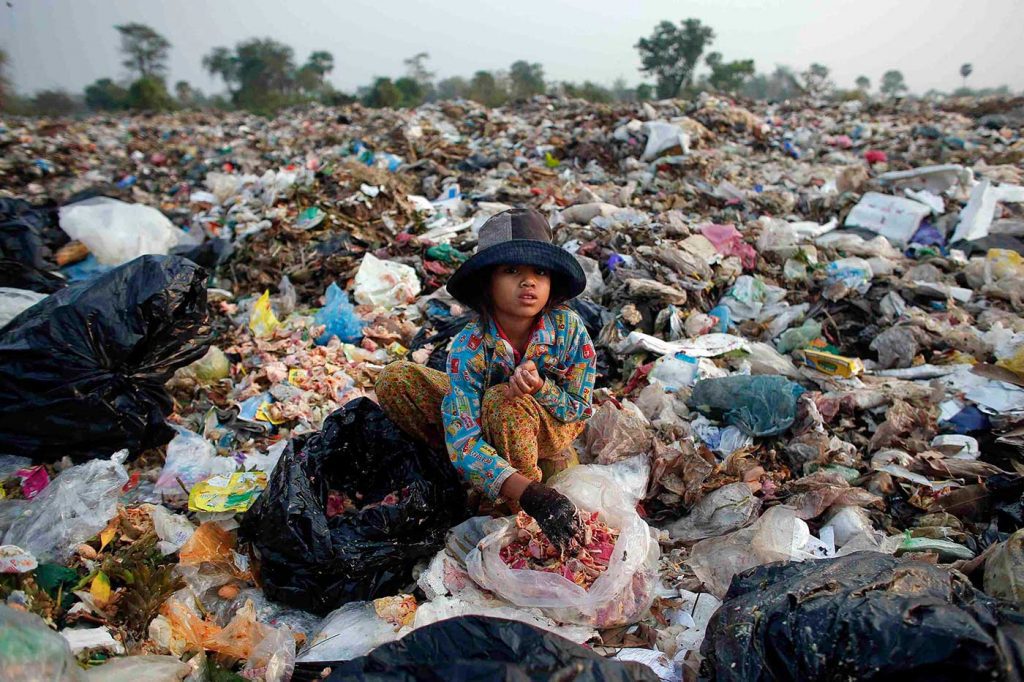
I’m not, by any stretch of the imagination, a tree-hugger. But I’m not a climate change denier either. I have little to no respect for people who don’t think climate change exists. I look at them the same way I look at flat-earthers. Sure, they can be nice people but I would be afraid to go near them in case willful stupidity is contagious.
That said, I’m not a tree-hugger. The problem I have with climate change is that it’s too big to digest. I–an individual in a world with 8.2 billion other individuals–don’t know what to do with it. I want to lower my carbon footprint but it’s daunting. Vehicles cause greenhouse gas emissions, yes, but I still have to go places. I can’t just be trapped at home. And even if I could be, even if I don’t have to travel for work, what then? Agriculture is a major contributor of greenhouse gases. So, rice, vegetables, meat, dairy–they all contribute significantly. Should I stop eating? And then there’s electricity. It’s too big of a problem.
With brings me to watches.
It’s very difficult to find accurate data on units sold per year because reports tend to focus on revenue. But some numbers are estimated. Several sites point to a billion watches produced every year with China, Japan, and Switzerland taking a big chunk of the cake in terms of production. A billion watches. Again, this number is inaccurate. For our purposes here, we don’t need a billion. So let’s be conservative and cut that figure in half. 500 million watches. Every year. 500 million watches. One can argue that not all of them are sold. Sure I’ll give you that. Okay. But all of them were produced.
I think you know where this is going. I’m baffled at how wasteful human beings can get. What is a watch in 2024? Here is an item that is utterly useless, provides no real value, no real reason to justify its continued existence and consumption; yet we’re making half a billion of these every year.
I am, of course, at fault here, along with my fellow hobbyists. Collecting watches is a sickness and an obsession. The harsh truth is it’s causing more harm than good and without justification. Who really needs a watch? Perhaps if you’re a nurse or a doctor. Maybe if you’re a firefighter. But even those who need a watch to do a job only need one, not a new one every other month. How many of that half a billion per year watches go to people who actually need them for their jobs, you think? If I were a betting man I would bet that a disproportionately huge number of watches go to that tiny pollution of collectors and enthusiasts.
That five hundred million potential landfill fodder remains unjustified. If you’re the type of person who buys a brand new watch every month, it’s more your fault than mine. I buy a brand new watch once a year and I’ve only started doing that two years ago. Which is not to say I’m exonerated for my sins against the planet. I am still at fault. But more you than me. I know, throwing rocks inside a glass house.
We can’t fully commit to reducing our carbon footprint like the hardcore environmentalists want. We have lives to live and live them well. Like I said, climate change is too big of a problem. It’s not black and white. We may never be able to cut back on the amount of food we consume even if that’s survivable, maybe even healthier. We may never be able to cut back on our travels. But these are important. Trade-offs are possible but no one will be able to fully blame us if we’re unsuccessful in our attempt to reduce. We have to live. There is raison d’etre for these things. At the very least bring your eco-friendly, reusable bag when you do your groceries.
But watches have zero benefits to humanity that justify their negative impact on the environment. Really, I mean, seriously. 0. You can make a case for upgrading your smartphones and computers every so many years. The technology improves, even if only incrementally. That iPhone you bought last year is more powerful than the iPhone you got three years ago. Even if we could live with the older model for longer than we usually do, it makes sense to buy a new one every once and a while. And no one, not even the richest of the rich buys a new laptop every month.
What justifies buying a new watch every two months or so? Even my one-a-year purchase is egregious. Did the technology that makes these watches tick improved to the point that we have to get the latest and the brightest, several times a year? The answer ultimately is that watches make us happy. We find joy in acquiring new watches. What’s wrong with that? Everything. It is selfish and contributes nothing to society. We teach our children to be prudent and we try to instill discipline in them. But look at us consume watches like water.
I collect mostly vintage, which makes me sleep a little better at night. I feel that that’s a more sustainable way of doing this ridiculous hobby. These watches were not produced lately, maybe not even in the last three decades, therefore they’re not adding to my or anyone else’s carbon footprint. They already exist in the world. I’m just helping postpone their eventual path towards already overfilled landfills. It’s not a better solution than to fully stop buying watches altogether but it’s a whole lot better than overconsumption.
Don’t get me wrong. I don’t buy vintage to save the environment. But it’s a nice bonus that I’m not contributing to the problem. At least, not adding more than my unnecessary one-a-year purchase. And that’s something I plan on drastically reducing, if I can’t fully stop it. One brand new watch every few years or so seems reasonable.
Look, it’s not like I don’t understand the dilemma. I too am addicted to watches. I collect them, stare at them, fuck, I write about them. I attend meetups. But surely there’s a better way to enjoy what we enjoy without doing irreparable harm to the only planet we have? It’s not like food that cutting back on might create health issues. They’re useless, outdated fashion thingies that don’t even do a good job at being fashion things. They go unnoticed by the majority of the population. Remember that mantra, no one cares about your watch except you? Prioritizing something that brings joy only to you and no one else is ultimately, tragically, unsustainable and selfish.
Where do we go from here? Do we stop buying brand new watches collectively as a community? What happens then to the jobs of the thousands, if not hundreds of thousands, of people who source materials, make parts, put them together, market (and whatever else) the half a billion new watches that didn’t exist last year? Do they not count? Should they suffer? I don’t have any answers. Climate change is too overwhelming for my little brain to process. All I know is, as an individual–no different from the rest of the eight billion individuals out there–I should do something, however, small. Here’s a cliché: The only thing necessary for the triumph of evil is for good men to do nothing.
We have to do something, anything. Something. So, with me, I’ll go with Ryan Schwartz’s suggestion, “I may never buy a new watch again.” While he was mainly talking about watch sizes, the sentiment counts.


As of late, I have been really thinking about the environmental impact of watches. There is nothing I’d rather get rid of more than sapphire crystals. It adds so much cost and requires so much energy for, in my eyes, no real-world benefit. Bash your sapphire crystal against the wall and it shatters, giving a watchmaker a nice payday and starting the cycle of using up tons of energy once again. Bash acrylic against the wall and… Nothing. It’ll get scratched, but I polish my acrylic crystals for fun, it’s no work at all. It doesn’t require much resources (just a bit of silver polish or sandpaper) and has a nearly infinite life. You will need to be some crazy guy to scratch your crystal up so frequently that polishing it will wear it too thin. It will start to yellow after forty to fifty years, which is the only downside. At least it’s more recyclable than sapphire.
I’m proud to buy exclusively vintage. I don’t do it to save the world. Buying exclusively second had watches is impossible for everyone and probably won’t do much. But I try to buy everything second hand. I prefer writing with a fountain pen. I prefer older cars because they aren’t the size and weight of tower blocks.
Maybe I’m a kook for liking small coupés, small watches and old pens, but that’s just who I am. And the rest of the guys at this blog are more or less just like me.
LikeLike
interesting post Sherwin. While I care deeply for the environment I also suffer from the feeling of utter hopelessness about my ability to do anything. We’re a bike riding family, that eats mostly vegetables, and we conscientiously recycle, to name a few things. We vote green and it’s basically a wasted vote.
I wish cost of polluting was reflected in everything I buy. Watches included!
There are always ~ 20 massive freighters at in our harbour nearby that each represent 10s of thousands of vehicles on the road making pollution. Each of the several cruise ships coming and going at our docks has the same air pollution issue, but adds a cities worth of raw sewage per day into our local bays. The air close to the docks gets unbreathable. This is one TINY aspect of global pollution that I see daily.
Polluting is free, has always been free, and will likely remain free for our lifetimes. Industry is incentivized to pollute.
Watches might be a millionth of a percentage point, or generously 1 whole ship of the 100,000 that are plowing the seas, but I guess we can buy 1 less watch and make a difference that way. Or, I can shout at the clouds and shake my fist vigorously with equal effect. 😢
LikeLike
I am a conservationist despite knowing that AGW and other such funding-led societal orthodoxies are merely disingenuous excuses for bogus schemes to enrich the rich and impoverish the poor. But I oppose unchecked and irrational consumerism on all fronts. It’s hard not to bring up capitalism. On one hand one can laud the triumphs of the system that led to such tiny precision marvels going from being the second or third most expensive thing a family owned to baubles bought for amusement with discretionary funds by many on the regular. Of course on the flipside, what better argument is there for tariffs and other restrictions on trade and currency imbalances such that such excesses do not exist?
However this is also a spiritual or otherwise emotional or societal void and dysfunction at play. We like to pretend that frivolous redundant purchases are just a harmless laugh for those with sound finances, but this omits the emptiness that makes such a thing even conceivable. I am not entirely sure if this is merely small-scale affluenza or the normal materialism of those who have no higher purposes in life than momentary pleasures.
LikeLike