

You have decided to dip your toe into vintage watch collecting. Like a certain potato chip (crisp for those of you that eat beans on toast), you can never have just one. There are certain categories that you should/must have in your collection. These are the Jungian archetypes of vintage watches that will bring pleasure or at least ease the pain of vintage watch collecting. Stop chasing the shadows on the wall of the cave and buy these instead.
Old reliable
This is going to seem obvious because it is obvious: the primary ability of a watch is reliability. Your grab and go quartz watch has a twitchy second hand or is just inert: that is a fail but an understandable one. Some vintage watches fail and fail and fail. I had a day this week where I had to go three deep to get one that worked. They all had functioned perfectly the last time that I wore them. I always have multiple watches at the watchmaker. You can’t have a three-watch collection or even a five-watch collection of all vintage pieces. There will be attrition.
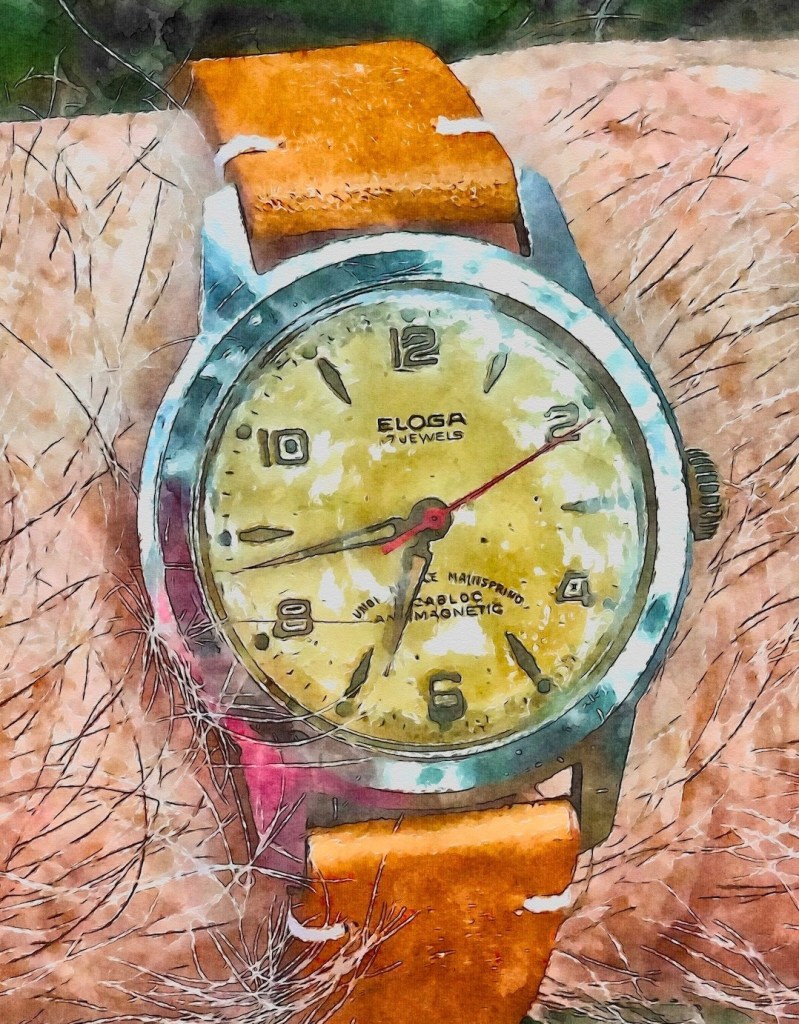
The vast majority of my watches “work”, meaning that I can get a day out of them. There is a core though that are a level above that. They are not necessarily the most expensive or impressive. They just work every day and still have the correct time the next morning. Here is a 1950’s Eloga with a slightly tropicalized dial. I can’t find a strap that I like with it, but it has never failed me, years of reliability. It did not cost much and will not bring much. Watches come and go, but this stays because its reliability is unmatched. It is always a terrible feeling when you look at your watch and realize that your watch will only be accurate twice that day.
The flash of gold
Gold watches have generally fallen out of favor. They dominated watch sales until well into the 1970’s. Most watches sold today to enthusiasts and non-enthusiasts alike are black dial steel sports watches. In the luxury space precious metals are more popular, but most of us are only tourists there.
I understand attraction of the steel sports watch. They are versatile and rugged. We live in a less formal society. It used to be that men wore suits to work in most non-factory jobs. Very few people dress up to sit in front of computer. I am old school, even for those in my profession, but I still have the ability to dress down several times a week.
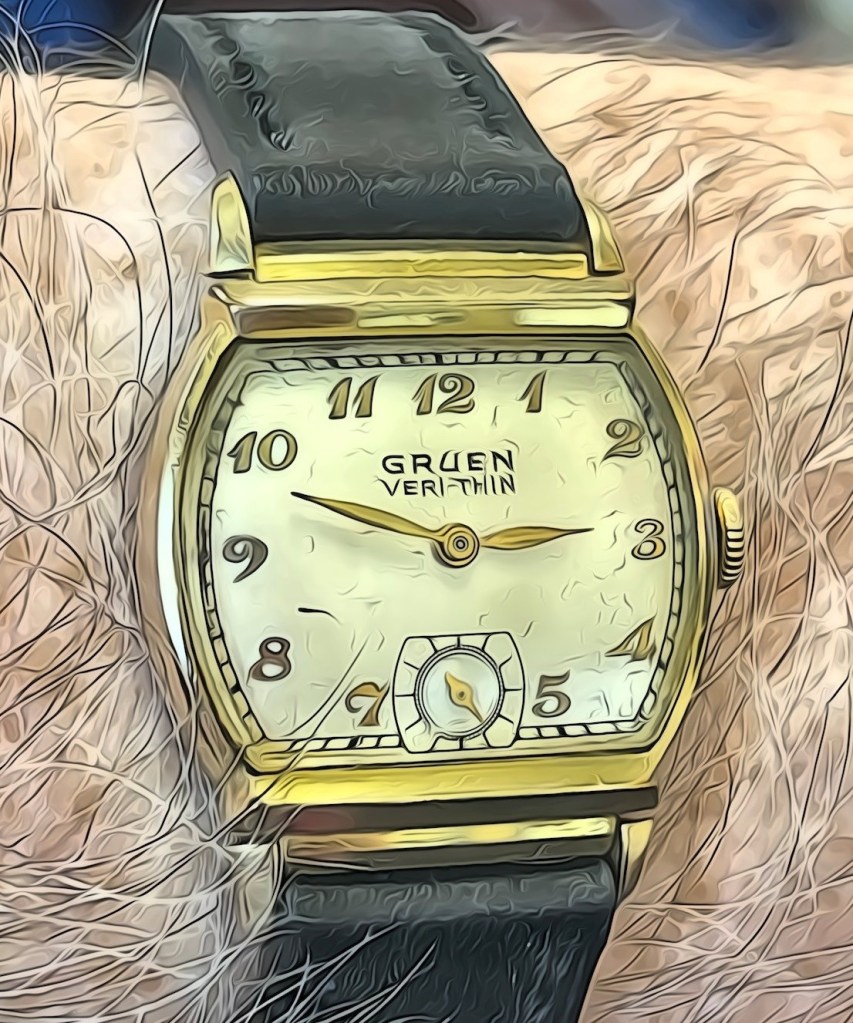
The steel sports watch is the right choice in most situations; however, some occasions require something extra. A gold vintage watch can do that for a fraction of the cost. Dinner with a client, anniversary, a play, an opera, a date (do people still do that…I have heard concerning things), these are all times for the gold vintage watch. The visual value that it delivers is out of proportion to its cost.
Now, you can pay attention to gold content if you wish to. Most watches are plated in 10 or 14 carat gold. The higher the gold content, the less it is likely to tarnish. Watch for brassing, the base metal (brass) showing through the plating. At 18k you are mostly paying for the gold content, not the watch part. (So many pocket watches were melted down during the Financial Crisis of 2008. It was a watch apocalypse.) Having a reliable vintage gold watch means never having to wear a diver on an undersized NATO strap with a tuxedo. People may not notice your watch, but they do see the flash of gold (real gold, not PVD).
The unicorn
If you go over to your watch box(es) right now and take a hard look you will discern an overarching taste preference. It may be the “dark dialed divers of despair” that I call the modern sports watch collection of some. Some people can tell you the individual names of members of a boy band, even a K-Pop boy band, just like some can tell you distinctions in a box of Seiko divers. I can’t. But just because I don’t have a modern collection style sense, doesn’t mean that I don’t fall into certain conventions. I have tanks for days. I have mid-century three handers. Most have light dials. All collections would benefit from a watch that goes against the grain, that is an anomaly.
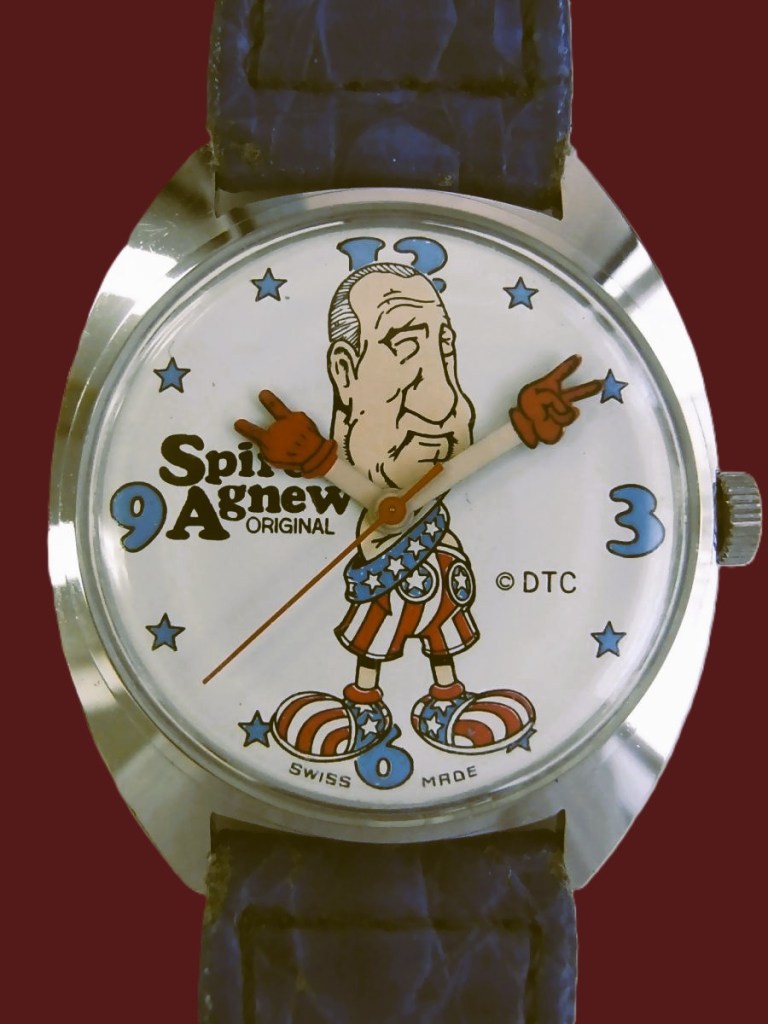
In a modern collection you can break up the monotony with a Mr. Jones or a Xeric. Sure, you will only wear them occasionally, but that is the point much more than actually telling the time. It is harder to do this in a vintage context. Vintage novelty watches were usually poorly made and have not lasted in working condition. When I wear my Roy Rogers I don’t need to actually set the time. It is barely accurate and is very close to illegible. You may have a Christmas tie (for men), why not a Christmas watch? You can wear a Spiro Agnew watch ironically (is there any other way?)
A word of caution: several years ago, several watch companies put out “Mao waving” watches. For every person who finds this to be cheekily insouciant, there will be others whose college professor grandparents had to plant rice and who remember the millions who perished in the grand social experiment. Communist kitsch is as verboten as Nazi kitsch. (Yes, that includes Che t-shirts and SS tattoos. No serious person gets an SS themed tattoo, right?)
The orphan
That Eloga that I mentioned earlier fits in here. Many vintage watches will fit into more than one of these categories. When you search online retailers, not just eBay but places like Watches 83, you will see brands that you have never heard of, brands that have disappeared. Some will have only been sold in certain European countries, some were New York assemblers all working out of the same neighborhood or building. That doesn’t mean that they aren’t quality watches. The movements will have all been made by the same factories, the same with other components. Take a chance on these. This is where the bargains are. Altus is the same company as Glycine, at a fraction of the cost. The Golana won’t look like other Swiss watches (usually) but will be accurate like one. Do a little online research to convince yourself that these are not pin pallet tourist watches or Hong Kong fakes.
The legacy
Many have been lucky enough to receive a watch from a loved one, grandpa’s watch. I have two watches from my grandfather: an Omega Seamaster DeVille from the mid-1960’s and a 1980’s Pulsar with a tonneau case. The Pulsar fit his personality much better than the Omega. He was a no-nonsense engineer who preferred to spend his money on travel rather than on things.
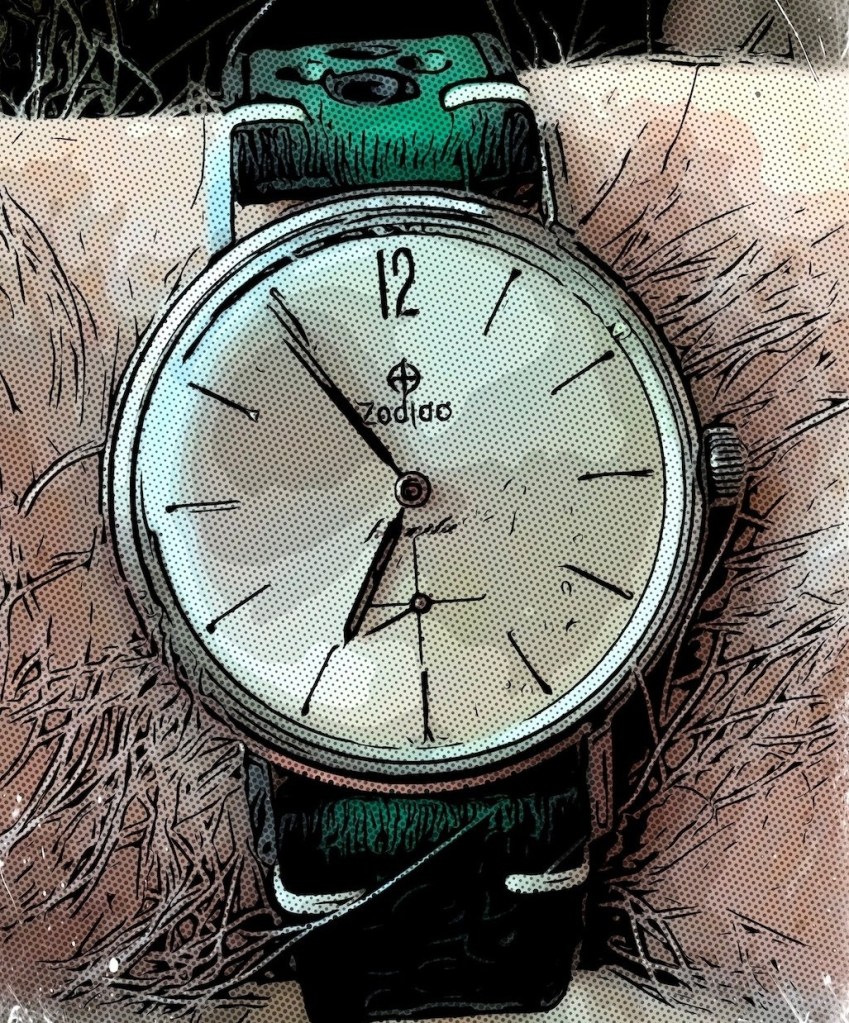
I have one of my father’s watches. Several years ago, he emptied the workbench drawer in the basement where he kept all of his tools and things that he would not throw away. He did not remember the Zodiac at all. He had no story associated with it. My mother thinks that it may have been an early Christmas or anniversary gift. I remembered the Seiko and Pulsar. I had no sentimental attachment to them, only the mystery Zodiac. When we were going through his things we found an early Swatch in great condition. None of us remembered it, a present for some Father’s Day in the 1980’s.
These watches, whether expensive or humble, have a special place. This is where the normal math of vintage restoration does not apply. It is worth every penny to have a watch restored to working order even if that expense is more than the market value of watch. I am keeping my grandfather’s running even though it would bring less than $20.00 on eBay. Keep a slot for these hand-me-downs in the watch box. Wear them on days charged with memory.
If you keep to these archetypes your vintage acquisitions will add balance to your collection and keep it from becoming monotonous. The only cure for watch collection monotony is to buy more watches and that is insanity.
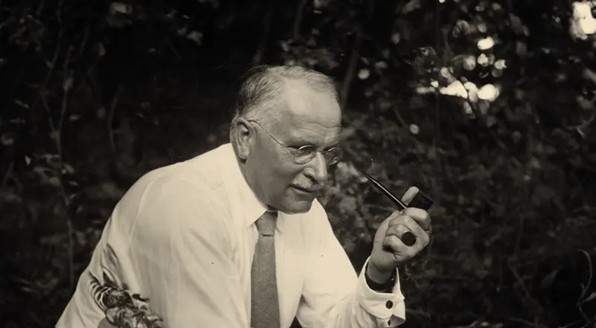
(Carl Jung was always pondering his watch collection. Big Tavannes fan, that Carl.)


“Having a reliable vintage gold watch means never having to wear a diver on an undersized NATO strap with a tuxedo.”
I believe that cornball was wearing a white dinner jacket. Unsure if he was in the tropics at the time or not.
The entire article could have merely read “dark dialed divers of despair” and it would have been award-worthy
LikeLiked by 1 person