

In the first installment of this occasional series, I advocated for gold watches, small watches, and non-round case shapes. My arguments were sound and due to their obvious correctness, I don’t feel the need to defend or revisit those points. There is more to explore.
But first, I want to step back and note a passing, not of a person necessarily, but more of a generation and an aesthetic. If you are close to my age your mother and aunts may be well into their eighties. Some may have passed. Others may be diminished. I have been lucky (imagine the sound of me knocking on my wooden desk). I haven’t personally lost any of this wartime generation. This was a cohort of women that came of age in the early 1960’s and really came into their own in the 1970’s. Some of these we now describe as “Second Wave” feminists. This was the generation that tried to “have it all”, family and career, and entered the workforce out of choice, not wartime necessity. They faced headwinds in the culture that would make today’s youth curl into a fetal position and give up.
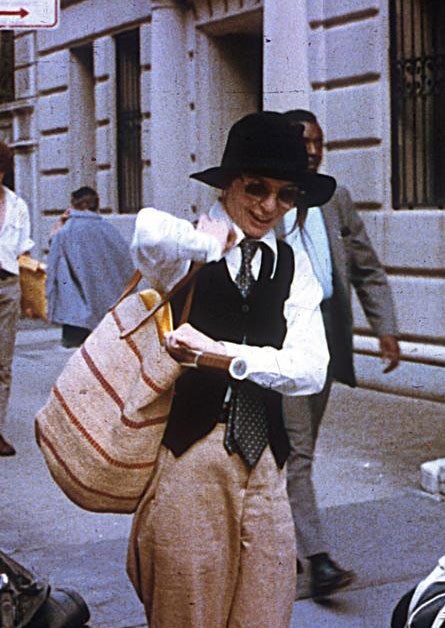
(The oversized bag was de rigueur.)
These women had their own style. It was not quite shabby chic, that would come later. Perhaps, a better way to think about it is Diane Keaton’s character in Annie Hall (1977). Most of the clothes that she wore in that film were her own. That was her style, not something imposed on her by a costume director. My friend’s stepmother passed last year, and I helped him a little when it came time to remove her furniture. Her house was a hodgepodge of styles and eras. There were original antiques, modern copies, and odd orientalism everywhere. I immediately thought of my aunt.

(This lamp was liberated.)
My aunt now lives in a modest apartment and requires some care. I lived with her for a brief time in law school in a house that I first visited in 1975. It was a large house, more of a mansion by today’s standards, built in the Craftsman style that captured 1915 America. Her downstairs parlor was illuminated by 15-watt sconces. The furniture was large and was a mixture of Victorian and modern pieces. In the corner was a mounted full-sized mannequin wearing a World War I gas mask. The walls were covered by embossed crimson leather wallpaper. There was a large tasteful nude (of my aunt) over the mantle. The whole house was over-stimulating to a child, and scary at night.
My aunt wrote an opinion column for one of the city’s daily newspapers. She wore her hair long like Keaton or the recently passed Melanie (Safka) and kept it in a bun secured with lacquered wooden chopsticks. She wrote in long-hand and had couriers take the copy to a typing pool. She would get it back to correct. She seemed to survive on a diet of black coffee, feminism, and Virginia Slims. Everyone should have an aunt like mine. Her house was almost like a museum. Her style was eclectic.
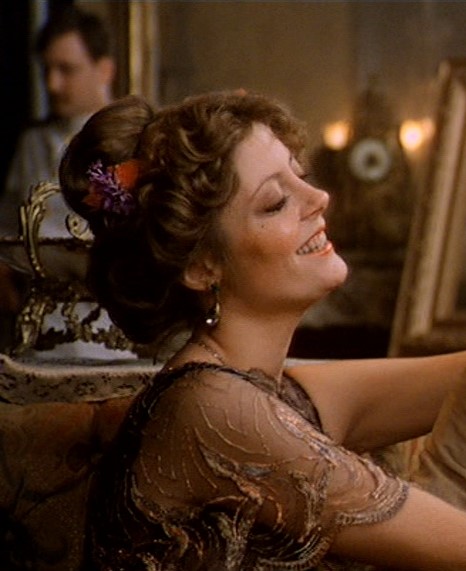
(Long hair with a bun was a thing. This is from Pretty Baby in 1978. This film would not be made today.)
I recently had a friend have to help his mother, also of this age, downsize. She has exquisite tastes. She preferred dark green embossed leather wallpaper. She used one hundred-year-old baking racks as knick-knack shelves. In and among it all were pieces of genuine folk art. No matter how different the items in a room may have been, it nevertheless had a coherent style.
Style and fashion are cyclical. When these women are gone it will be years until anything so bold comes back into style. Think of the whitewashed prairie aesthetic that dominates the glossy magazines and television programs. It will be a decade or more before that boredom subsides. Shiplap and milk paint are taking the starch out of us.
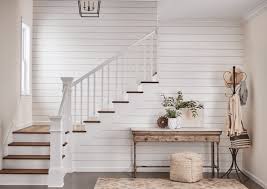
(This picture is not in black and white.)
What does that have to do with watches? Colored dials and guilloche patterns have made a comeback, and that is a good thing. What I want to impress upon you is the use of color in your strap choice.
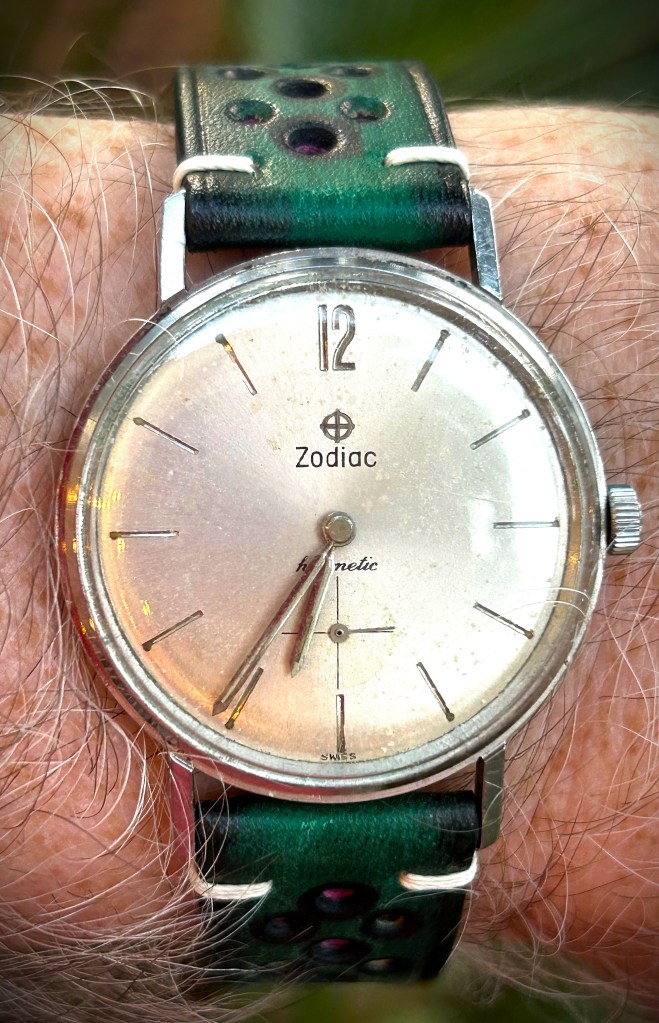
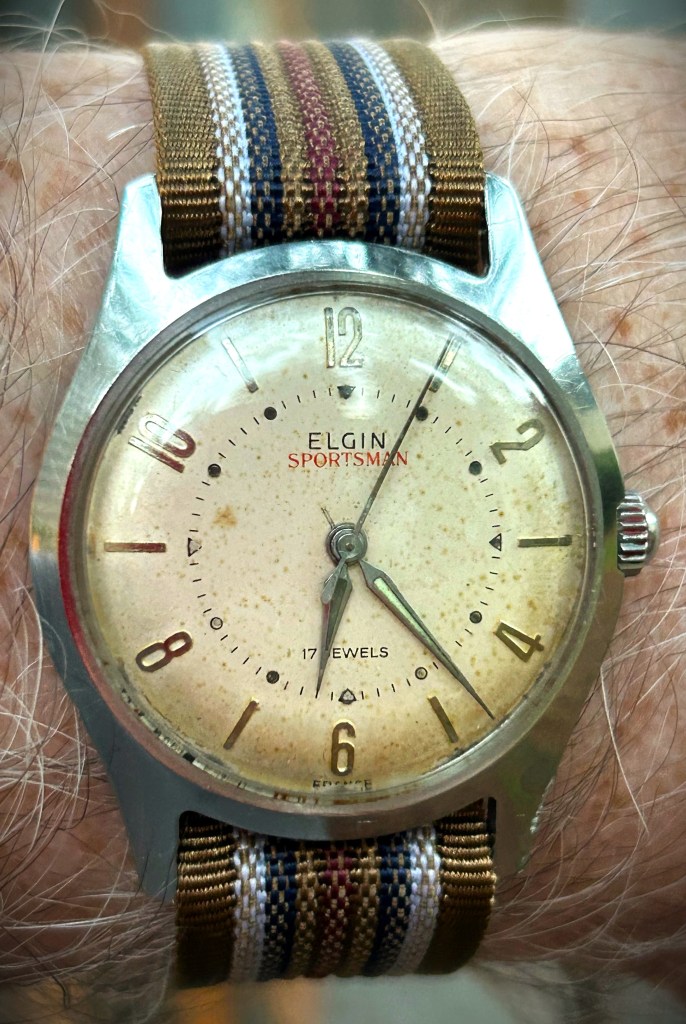
Here is the concept: (almost) anything goes. Don’t think that black leather straps must be worn with your “dress” watch or that some green NATO strap must be used on a “field” watch. (The air quotes are intentional. These categories are amorphous and mean little.) Get some color on your wrist. Bracelets can be monotonous. Try something bright. Today I matched my tie with my watch strap. Because I could. Green broke up the hold of the silver on silver dial and hands. Can you imagine how invisible it would be with a silver tone expandible band as was popular in the day? If leather isn’t your thing, silicone comes in many bright colors, so do NATO straps. Bracelets are incredibly popular now because they are better made than they have ever been. They have their place, but not every place. Find some color that suits you and change it up, mix it up.
The brave women who covered their walls in colored leather (it must have been costly) are leaving the stage. Who will be bold enough to live in their Technicolor world? You, and me.
“Now when it is all over
And I become a seed
They’ll plant me in the universe
Where the balance gotta be
Now I don’t mind the dyin’, no
It’s the way it’s got to be
But I hope I leave behind
Just a little bit of me
A little bit of me”
–A Little Bit of Me, Melanie

 The Escapement Room
This was an excellent read! It reminded me of my anemoia for 1970s South Africa. In some places, it had the funky style that you discussed. In most places, it looked like segregation and sanctions. The Cape was and still is the most liberal part of the country, thus has a bit more colour to it; take a look at these images.
I never lived to experience that era. My parents were both born at the end of the ’70s, so also didn’t experience much of it. From what I have heard, it was hard. The government grew more oppressive as a frantic attempt to hold onto power, with the world responding with heavy economic sanctions. Then they sent countless young men off to die in Angola. The old government didn’t make much of an attempt to honour them, being essentially overthrown a decade later. The new government will never honour them for political (and other, more sinister) reasons.
The Ford Cortina and Chevrolet Kommando are icons of the era. Fashion was either dull and drab, or as colourful as living under a quasi-democratic, quasi-dictative government allowed. There is some resurgence of seventies style with todays youth, albeit overshadowed by their strange love of baggy tracksuit pants (AmEng sweatpants.)
This post brought back fond memories of a dark time that I didn’t live through, a time confined to the realm of anecdotes and tales. It was a dark time, but light was at the end of the tunnel.
Then the light also turned out to be dark. We traded oppression for corruption. The faces changed, but the politics didn’t.
I like to remind myself of my freedom by thinking of how many things would send me to jail if I were to have done them in ’70s SA. I can think of three off the top of my head.
Very long and convoluted response, I know, but I love the message of your post. We all need a little bit of colour in our life, as colour seems to be disappearing as a result of corporate minimalism. Everything must fit and look good on a phone screen. Everything must be inoffensive. Colour between the lines, but only use shades of grey. Bugger off, let’s go out and keep colour and style alive!
LikeLiked by 1 person
Beautiful article.
LikeLiked by 1 person